


POM engineering plastic is a widely-used thermoplastic with notable advantages, extensively applied in industries such as automotive, electronics, mechanics, and healthcare. So, what makes POM advantageous, and how does it serve production needs? Thai Duong Plastic shares detailed insights about this engineering material in this article.
Overview of POM Engineering Plastic
POM stands for Polyoxymethylene, also commonly known as acetal or polyacetal. It is renowned for its high stiffness, low friction, and excellent dimensional stability. This material is often utilized for components requiring high mechanical performance, even at temperatures as low as -40°C.
POM is produced by numerous chemical manufacturers, available under various commercial brands such as Delrin, Kocetal, Ultraform, Celcon, Duracon, and Kepital.
The natural color of POM is opaque white due to its high crystalline content. However, it can also be produced in various other colors. Its density ranges approximately from 1.410 to 1.420 g/cm³.
Advantages and Limitations of POM Plastic
Advantages
- High mechanical strength, impact resistance, and excellent wear resistance.
- Low friction and inherent self-lubrication.
- Low water absorption and superior chemical resistance.
- Excellent dimensional stability and good electrical insulation.
- Ease of machining and forming processes.

Limitations
- Poor resistance to strong acids, alkalis, and oxidizing agents.
- High thermal expansion rate.
- Poor resistance to UV radiation.
- Narrow working temperature range (-40°C to 100°C).
Common Types of POM Plastic
POM plastics are generally classified into two main types: homopolymer (POM-H) and copolymer (POM-C). Each type has distinct characteristics:
- POM-H: Features higher tensile strength, fatigue resistance, and rigidity due to superior crystallinity. However, it is more challenging to machine and exhibits lower thermal stability.
- POM-C: Easier machining and better thermal and chemical stability. It offers better chemical resistance but slightly lower rigidity and strength compared to POM-H.
Both POM-H and POM-C are crystalline materials with minimal moisture absorption and high shrinkage rates (typically ranging from 2% to 3.5%, depending on reinforcement).
Importance of POM Engineering Plastic in Manufacturing
POM engineering plastic plays an essential role in various industries due to its superior properties and versatility.
Replacement for Non-ferrous Metals:
- Due to high strength and low weight, POM plastic frequently replaces non-ferrous metals such as copper, zinc, tin, and lead in many industrial applications.
Widely Used Applications:
- Machinery and automotive: Manufacture of wear-resistant and load-bearing components.
- Electronics and electrical engineering: Components requiring stability and chemical resistance.
- Daily use: Household items, sporting goods, recreational equipment, precision tools.
- Construction: Waterproofing materials and pipe fittings.
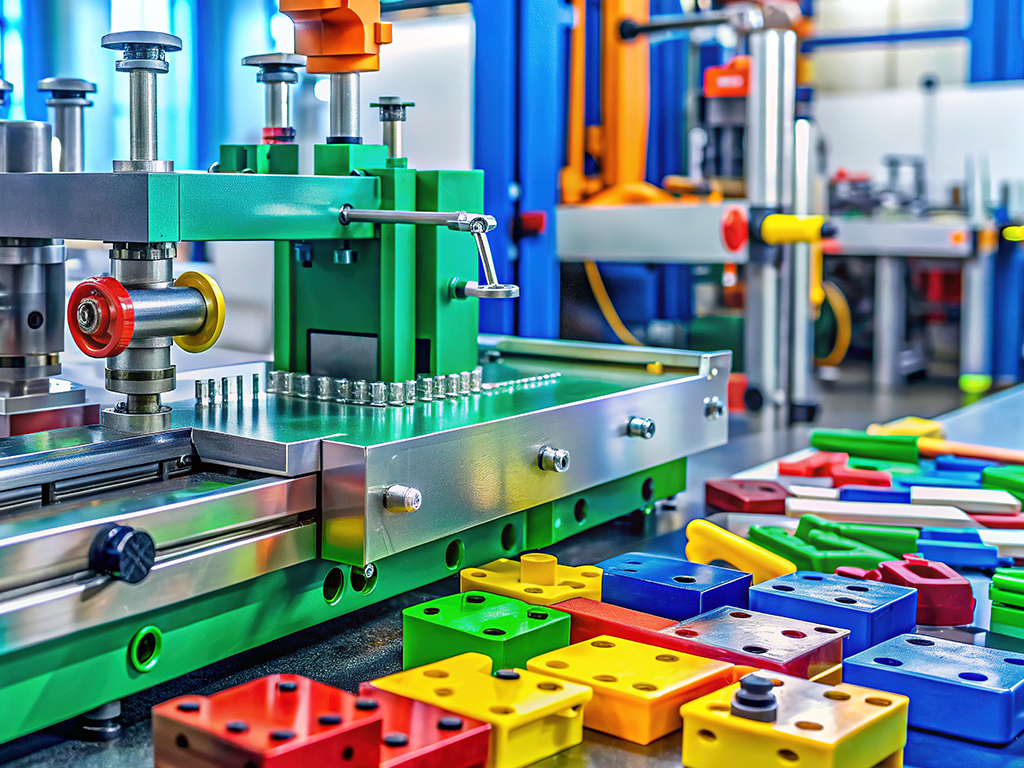
Why is POM the Top Choice in Injection Molding?
Compared to other engineering plastics like PA or PBT, POM is easier to shape precisely and maintains dimensional stability throughout production. This significantly reduces errors and ensures precision in small, complex parts such as gears, bearings, bushings, and components requiring sliding or rotational movements.
Therefore, POM plastic is an ideal material for components demanding durability and high load-bearing capacity in industries with strict precision requirements.
Related FAQs
Is POM Plastic Toxic?
POM plastic is safe in solid form and is commonly used in food processing equipment. However, POM vapor or molten POM may be hazardous if inhaled or in contact with skin. Burning or melting POM at high temperatures may release toxic gases.
What is the Temperature Range for POM Plastic?
POM plastic maintains stable operation from -40°C to 100°C. Short-term working temperature can reach up to 140°C, but prolonged exposure to higher temperatures reduces its lifespan.
Thai Duong Plastic hopes this article helps you better understand POM engineering plastic and why it is highly favored in injection molding technology. Should you have any questions or require further information, please leave a comment below, and we will promptly respond.