


Rubber extrusion is a rubber processing method ideally suited for producing components with a fixed cross-sectional shape and requiring continuous, high-volume manufacturing. This process significantly differs from traditional rubber molding techniques such as injection molding or compression molding. In this article, Thai Duong Plastics explains the extrusion process, how it works, what materials are used, practical applications, and its advantages and limitations.
What Is Rubber Extrusion?
Rubber extrusion is a process that uses an extruder to shape rubber into continuous strips or profiles with a consistent cross-section, based on a predefined design. Unlike closed-mold methods, extrusion does not use enclosed molds; instead, it uses a die with a shaped opening to form the product’s profile. Thanks to its continuous production capability, rubber extrusion is widely used for manufacturing rubber seals, hoses, and more.
Materials commonly used in rubber extrusion include EPDM, natural rubber (NR), NBR, silicone, and neoprene (CR). Each has unique properties suited for different applications. Material selection depends on the product’s technical requirements and specific usage conditions.
How a Rubber Extrusion Machine Works
Rubber extrusion machines operate using a screw mechanism inside a heated barrel. The process begins by feeding a rubber compound into the hopper. A rotating screw then pushes the material along the barrel.
As the material moves, it is gradually heated and softened. Upon reaching the die head, the rubber is forced through a die opening that shapes its cross-section. The result is a continuous rubber profile, which can then be vulcanized to achieve the required durability and elasticity.

Key Characteristics
Rubber extrusion has several important technical features:
- Continuous production allows for optimized productivity, ideal for standardized, mass-produced items.
- Products have uniform cross-sections and can be designed with complex profile shapes as needed.
- Closed molds are not required, reducing tooling costs and simplifying setup.
- Extruded products often require subsequent vulcanization to achieve final mechanical properties.
Applications of Extruded Rubber Products
Extruded rubber components are used in many industries due to their shape flexibility and stable properties after vulcanization. Common applications include:
- Rubber gaskets and seals: Used for sealing in car doors, aluminum frames, containers, and electrical cabinets to prevent dust, water, vibration, and noise.
- Rubber hoses: For conveying air, water, steam, or oil in mechanical, construction, agricultural, and food processing systems.
- Waterproofing and vibration-damping strips: Applied in expansion joints, concrete floors, or tunnel walls for sealing and shock absorption.
- Precision-molded technical gaskets: For machines, industrial equipment, or sealing systems like presses, industrial refrigerators, and medical devices.
- Custom rubber profiles: Made to fit specific applications in the maritime, aerospace, electronics, and energy industries.
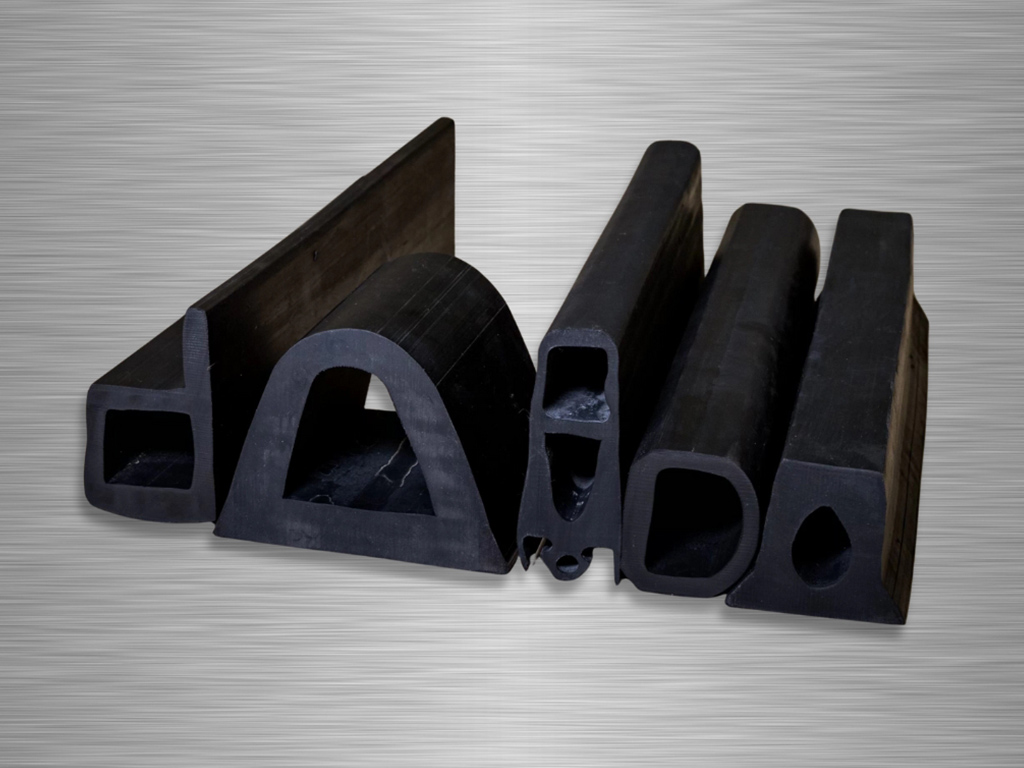
Comparison Between Rubber Extrusion and Other Methods
Compared to other rubber processing techniques, rubber extrusion has its own set of advantages and limitations, depending on the product type.
Advantages of Rubber Extrusion:
- Continuous process suitable for large-volume production, reducing time and manufacturing costs.
- Simple die design lowers tooling costs and allows for easy profile adjustments.
- Flexible product lengths make it easy to cut, package, and transport as needed.
- Ideal for uniform-length products such as rubber gaskets, rubber hoses, extruded silicone tubing, and technical rubber strips.
Limitations of Rubber Extrusion:
- Not suitable for three-dimensional or highly intricate parts.
- Requires additional vulcanization to complete mechanical properties.
- Lower dimensional accuracy and surface finish compared to closed-mold methods.
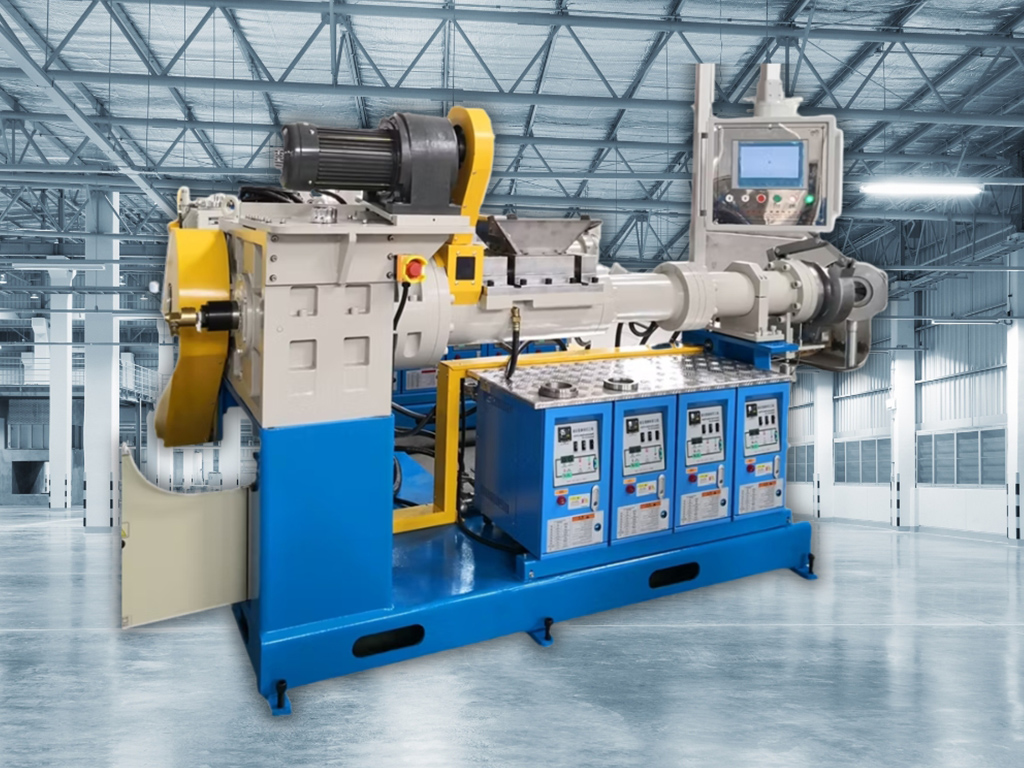
Rubber extrusion is an optimal solution for manufacturing rubber products with fixed cross-sectional shapes, particularly for high-volume orders requiring consistent quality. With extensive experience and modern equipment, Thai Duong Plastics provides high-quality industrial rubber extrusion services tailored to diverse technical requirements across various industries.