


Viton rubber is among the most widely used materials for applications that demand high durability and stability. In Vietnam, Viton is increasingly adopted in technical products supplied and fabricated by businesses-especially in rubber injection molding and seal manufacturing. Join Thai Duong Plastics to explore this rubber in more detail below.
What is Viton rubber?
Viton is the trade name for a fluoroelastomer in the FKM family, originally developed by DuPont and now managed by Chemours. This fluorinated synthetic rubber is formed from polymers such as hexafluoropropylene and vinylidene fluoride. It stands out for stable performance in environments with high temperatures, high pressure, and strong corrosive chemicals. Viton delivers numerous advantages in service, particularly in harsh conditions where conventional rubbers fall short.

Advantages:
- Excellent chemical resistance, including to solvents, fuels, mineral oils, and strong acids.
- Continuous high-temperature service around 200 to 250 °C.
- Resistance to ozone, UV, oxygen, and environmental aging.
- Tight sealing and good elastic recovery in sealing applications.
Disadvantages:
- Higher cost than common rubbers (NBR rubber, EPDM, etc.).
- Not suitable for high-pressure steam environments or certain chemistries containing amines or ketones.
Common Viton grades
Viton is available in multiple grades tailored to specific technical needs. Key types include:
- Viton A: The most common grade with the lowest fluorine content (about 66–67%). Resists petroleum oils, fuels, ozone, and weathering. Typically used for O-rings and seals in general service, with heat resistance up to about 200 °C.
- Viton B: Higher fluorine content than Viton A (about 67–68.5%); withstands strong solvents and fuels with oxidative additives. Suitable for chemical processing, refining, and highly corrosive environments.
- Viton F: Highest fluorine content (around 70%). Resists halogenated solvents, aviation fuels, and higher temperatures (around 230 °C). Used in aerospace, premium automotive, and aggressive chemical applications.
- Viton ETP: Broad operating range (−40 °C to +200 °C) and resistance to special chemicals (ketones, esters, ethers…). Used in medical equipment, aerospace, and more.
There are also high-performance variants developed for specialized applications in aerospace, oil & gas, and medical devices.
Most common applications of Viton rubber
Thanks to the technical properties outlined above, Viton is used across industries such as automotive, aerospace, oil & gas, chemicals, food processing, and medical devices. In working conditions that require stringent sealing, heat resistance, and corrosion resistance, Viton is a highly reliable choice.
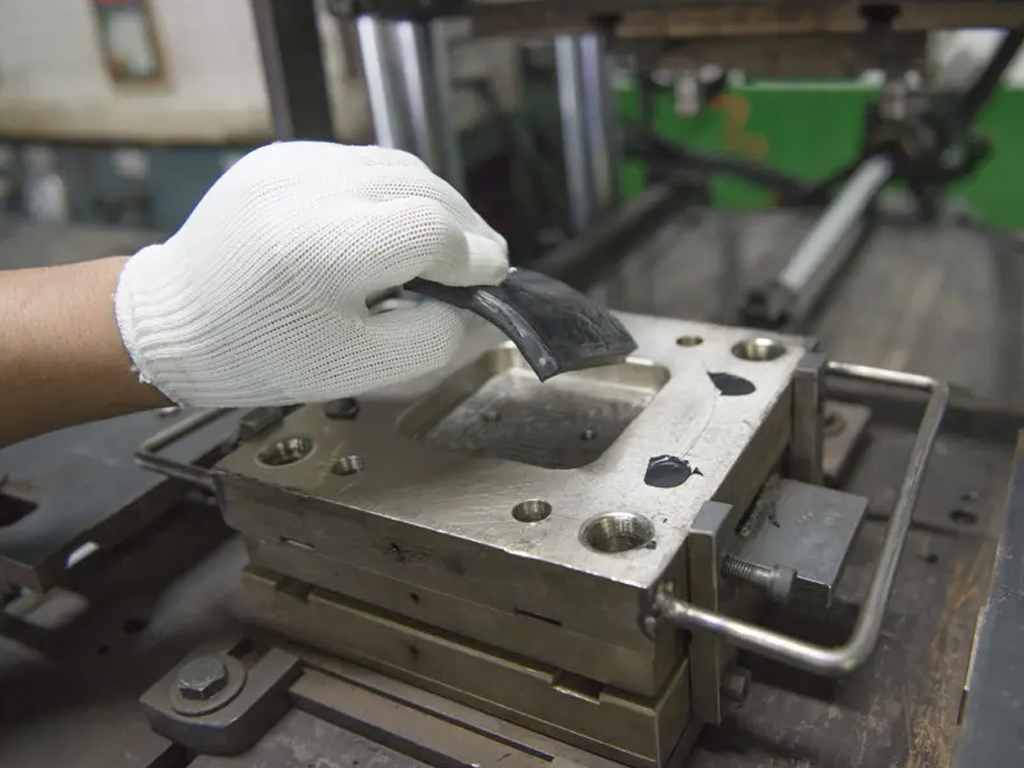
In injection molding, Viton is used to produce precision technical parts that must achieve absolute sealing. Typical parts include gaskets, seals, caps, and components in piping systems, pumps, and industrial valves. Injection molding delivers consistent quality and optimizes fit within mechanical or electronic systems.
Fabricated products made from Viton
Representative products manufactured from Viton rubber include:


Comparing Viton with other rubbers
Viton is a specialized rubber highly regarded for its exceptional heat and chemical resistance. Compared with NBR, Viton is better suited to high-end engineering applications. EPDM offers strong weather resistance and performs well at low temperatures, but it is not oil-resistant and therefore cannot replace Viton in chemical environments. Both NBR and EPDM are less expensive, yet they do not deliver the same long-term stability under severe conditions.
Silicone rubber excels in a wide temperature range-particularly in very cold environments-but is less durable in oils and strong solvents. PTFE, meanwhile, provides the best heat and chemical resistance among the materials listed, but lacks elasticity, making it unsuitable for flexible sealing. Thanks to its balanced durability, chemical resistance, and elasticity, Viton is often preferred in advanced industrial systems.
Viton rubber is the optimal choice for applications that require high durability, heat resistance, and chemical resistance. Selecting the right grade and processing technology will improve equipment performance. Follow more articles from Thai Duong Plastics to gain deeper insight into engineering rubber materials in manufacturing and fabrication.
Read more: What is CR Rubber: Comparison with NBR and the Best Types