


Rubber is one of the most flexible and widely used materials in modern life, helping improve quality of life while ensuring safety, convenience, and sustainability across living spaces. In the article below, Thai Duong Plastics explains the importance and common applications of rubber in contemporary daily life.
The importance of rubber materials in everyday life
Rubber serves as a crucial link between materials technology and practical consumer solutions. With its elasticity, electrical insulation, water resistance, and high mechanical strength, rubber functions both as a formable material and as a functional solution for soundproofing, anti-slip surfaces, vibration damping, thermal insulation, and protection.
Unlike traditional materials such as rigid plastics, metal, or wood, rubber can recover after deformation, adapts well to humid tropical climates, and is safe for everyday use. Thanks to its flexibility and user-friendly nature, it is increasingly chosen for products serving both individuals and households.

Common applications of rubber in modern life
With physical and chemical characteristics suited to many conditions of use, rubber has become a mainstay in consumer products. The examples below highlight rubber’s practical role in everyday life.
Rubber in household devices and everyday items
One of rubber’s most common uses is in everyday household items. Thanks to its softness, good grip, and water resistance, rubber is used to produce:
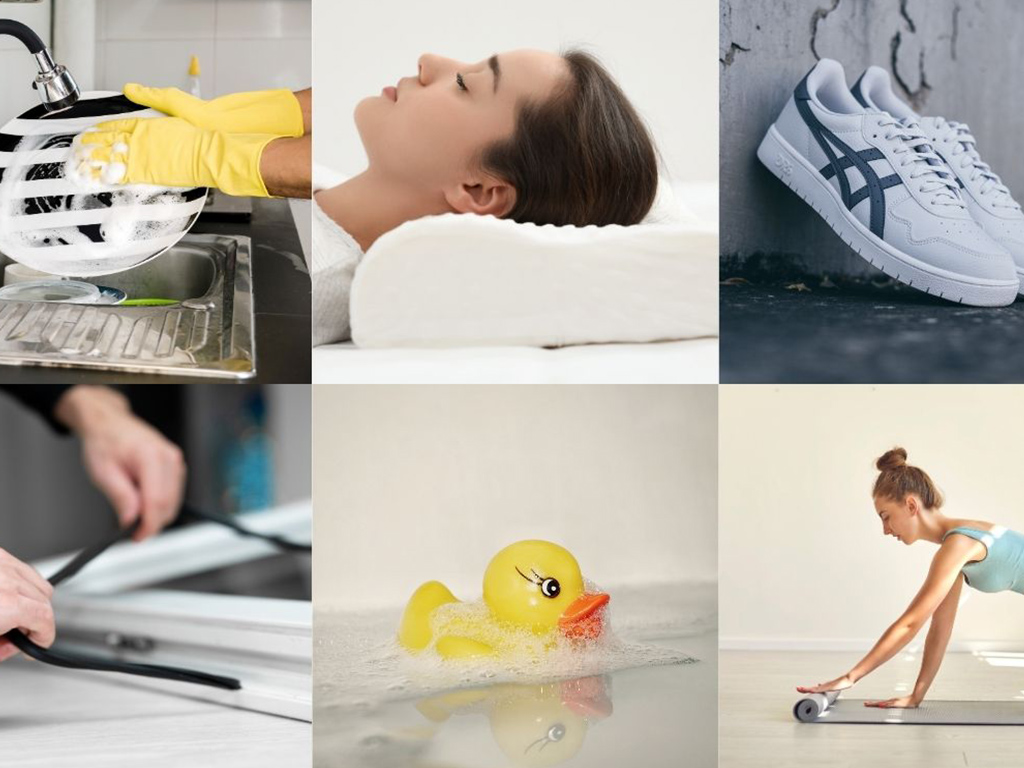
- Dishwashing and cleaning gloves.
- Anti-slip bath and kitchen floor mats.
- Seals for refrigerator doors, washing machines, and pressure cookers.
- Jar openers and heat-insulating pan handles.
- Chair and table leg pads to reduce noise and prevent floor scratches.
These products are typically made from natural or synthetic rubber, offering heat resistance, chemical resistance, and user safety.
Rubber in at-home health care
Beyond clinical settings, rubber is also common in personal care products used at home, such as:
- Neck pillows and seat cushions made from memory foam/latex foam.
- Rubber earplugs for noise reduction.
- Rubber massage tools to relieve body pressure.
- Support aids for rehabilitation after injury, such as wrist braces and lumbar cushions.
Rubber used in these products is designed for high elasticity, skin friendliness (non-irritating), and long service life.
Children’s products and learning aids
Rubber is an ideal choice for many products for young children due to its safety and impact-damping capacity. Typical applications include:
- Soft erasers and rubber pencil grips for an easier hold.
- Soft rubber corner guards and outlet covers to prevent injury.
- Non-toxic rubber toys that resist impact and are easy to clean.
- Children’s footwear with rubber soles for effective anti-slip performance.
These products generally meet non-toxicity standards and are designed to maximize safety for children in everyday activities.
See also: The role and applications of rubber in automotive manufacturing
Sports and physical exercise
Rubber is found in numerous fitness tools and equipment:
- Yoga mats and gym mats made from natural rubber or TPE.
- Resistance bands, gym balls, and dumbbell grips.
- Sports shoe soles and anti-slip slippers for bathrooms and pools.
Rubber products in this category typically require high grip, good elasticity, pressure tolerance, and abrasion resistance.
Technology and consumer electronics
Many familiar tech products are improved by incorporating rubber into their design:
- Phone cases and rubber-sheathed charging cables to prevent breakage.
- Rubber buttons on remotes, keyboards, and electronic meters.
- Waterproof gaskets in earphones, wristwatches, and Bluetooth speakers.
- Non-slip rubber feet for household and electronic devices.
With electrical insulation, shock absorption, and corrosion resistance, rubber protects devices and enhances user experience.
Housing construction and living spaces
Engineering rubber is used as a technical solution across many construction and interior applications:
- Rubber gaskets sealing windows and doors for soundproofing and heat retention.
- Anti-vibration rubber pads for washing machines, air conditioners, and water pumps.
- Rubber floor tiles and sheets for play areas and corridors to prevent slipping.
- Rubber waterproofing for roofs, balconies, or bathrooms.
Durability, weather resistance, and water resistance make rubber an ideal material in residential construction.
Recycling and environmental protection
Recycled rubber from tires and used rubber products is remanufactured into:
- Recycled rubber paving bricks that reduce noise and add resilience.
- Playground rubber mats to lessen injury risk for children.
- Flooring for gyms or warehouse spaces.
Rubber is widespread and essential across many aspects of daily life. With the trend toward sustainable, eco-friendly materials, rubber continues to be a preferred choice in product design and manufacturing. If you need further advice on this topic or on rubber-processing methods, please contact us for prompt support.
Continue reading: Common industrial applications of rubber