


Medical plastics manufacturing is the service of producing components-such as syringes, trays, device housings, and surgical accessories-by injecting molten plastic into molds with high precision. This process uses biocompatible materials that withstand sterilization and comply with international safety standards, helping businesses control costs, shorten time to market, and ensure clinical performance.
The role and applications of medical plastics manufacturing
Medical plastics manufacturing plays a vital role in supplying essential products for modern healthcare. It meets the demand for single-use disposables and supports the production of high-technology devices.
Notable applications of medical plastics include:
- Medical packaging: Plastic bottles, vials, and caps for pharmaceuticals and biologics.
- Protective equipment: Respirator masks, face shields, and personal protective accessories.
- Treatment-support components: Catheters, drains, and connectors in infusion systems.
- Medical device housings: Enclosures for analyzers, ventilators, and diagnostic modules.
- Laboratory instruments: Centrifuge tubes, racks, and specimen trays.
- Dental accessories: Impression trays, saliva ejectors, and impression tools.
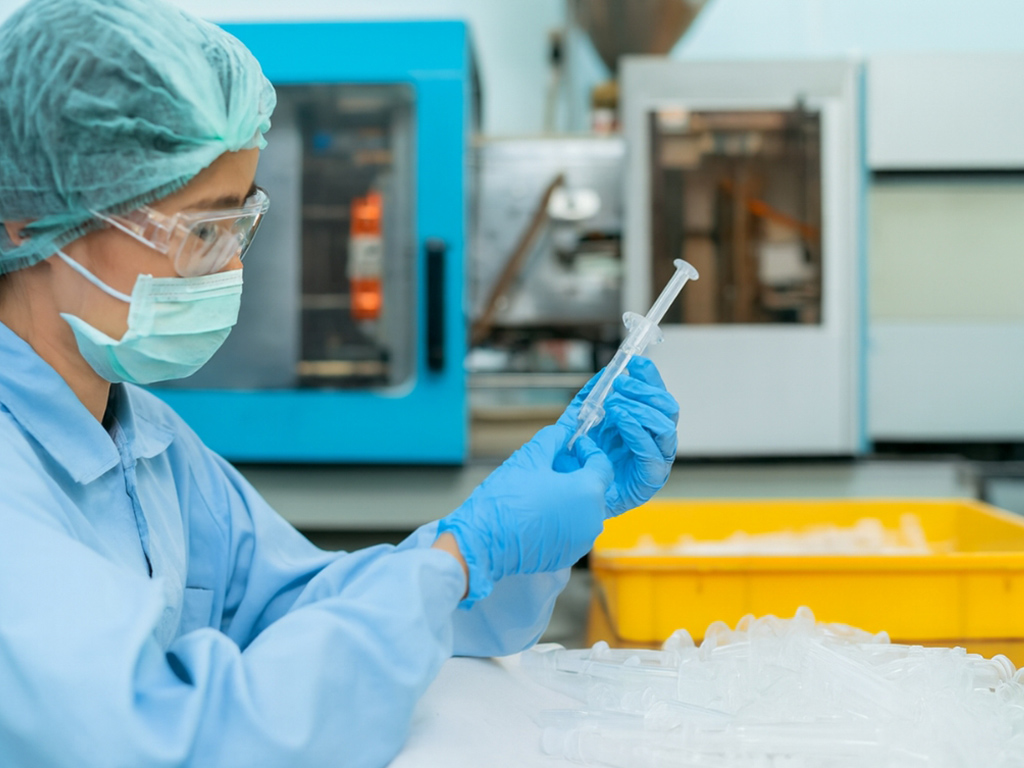
Key benefits of applying medical plastics manufacturing include flexible customization, large-volume production with consistent quality, clear traceability, and lower investment costs compared with building your own factory.
See also: Medical plastic products that meet international standards
The medical plastics manufacturing process
The process follows standardized steps to optimize quality and shorten lead time:
- Design and simulation: Capture functional requirements; select materials according to level of biological contact and sterilization method; simulate flow and cooling to predict weld lines, shrinkage, and warpage.
- Precision mold making: Machine molds via CNC and EDM; refine cavity surfaces; optimize hot runners and gate locations to stabilize shot weight.
- Injection molding and forming: Control temperatures, holding pressure, and cooling time to achieve tight tolerances on thin, small parts; apply blow molding or extrusion for medical bottles and tubing.
- Assembly and inspection: Ultrasonic or infrared welding to avoid particulates; leak, dimensional, and functional testing before packaging in controlled environments.
Selecting plastics by sterilization method
Material selection should be based on biocompatibility level, sterilization resistance, and intended use:
- Polypropylene (PP): Suitable for disposables, closures, and handling trays; tolerates steam autoclave and EO gas.
- Polycarbonate (PC): Transparent and impact-resistant; used where direct visual inspection is needed.
- Polyethylene (PE): Flexible and stable with biological media; ideal for tubing and bags.
Product design should maintain uniform wall thickness, appropriate radii, and optimized flow orientation to limit warpage and improve cycle efficiency.
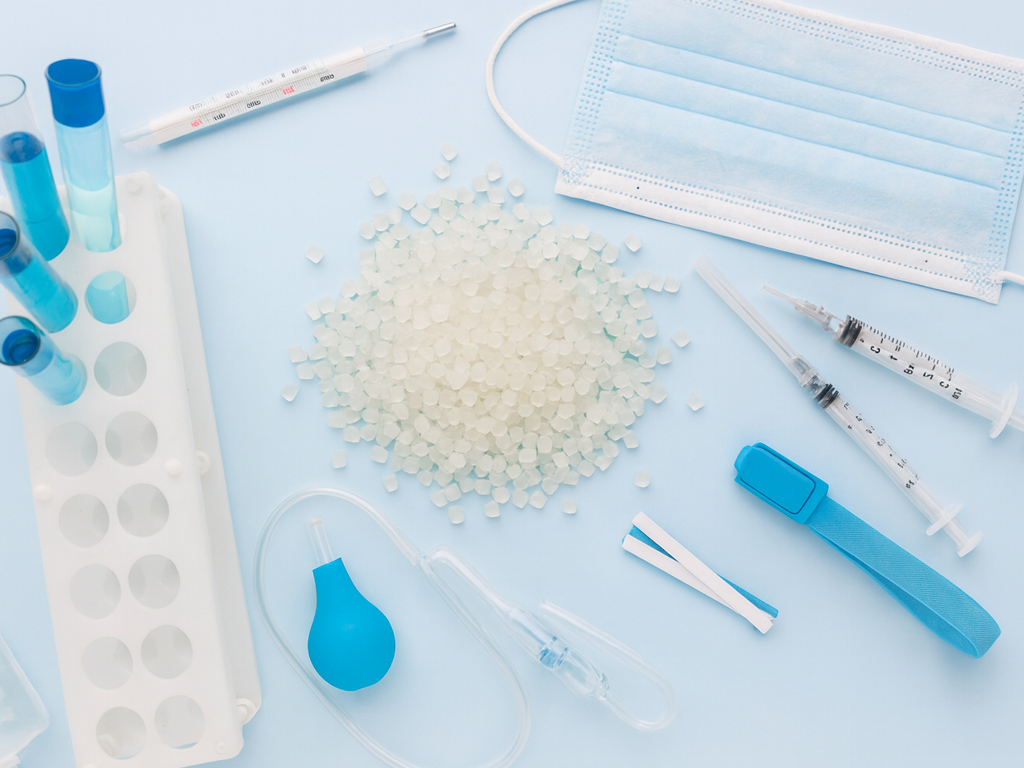
Technology and quality control
To meet stringent healthcare requirements, the manufacturing line employs modern technologies and controls:
- In-mold pressure sensors and shot weighing help keep shot weight stable.
- Non-contact dimensional monitoring on extruded tubing ensures concentricity and wall thickness.
- Process validation across installation, operational, and performance qualification stages (IQ/OQ/PQ), with records maintained for each item code.
- Cleanroom particle control by monitoring differential pressure, temperature, and humidity to minimize cross-contamination.
- Post-sterilization testing of mechanical, optical, and seal-integrity properties to ensure performance after steam, EO, or irradiation sterilization.
Choosing a medical plastics manufacturing partner
When selecting a partner, evaluate criteria such as mold design and fabrication capability, scalability, level of automation, cleanroom systems, quality-control processes, traceability, and experience running projects to international standards.
Thai Duong Plastics meets these criteria with end-to-end services-from design consulting to assembly in controlled environments. The company has produced multiple medical plastic lines using standardized processes for consistent quality. Our engineering team supports material selection compatible with the chosen sterilization method and optimizes production cycles to shorten time to commercialization.

Medical plastics manufacturing is an efficient way to produce devices with high precision and safety. By choosing the right partner, businesses can optimize costs, accelerate time to market, and meet international standards. With proven plastics manufacturing expertise and capacity, Thai Duong Plastics is a trusted choice for organizations that need high-quality medical plastic products.
Reference: List of reputable medical plastics manufacturers in Vietnam