
Hydraulic injection molding machines are widely used thanks to their strong clamping force, robust build, and ability to produce large plastic parts. They are common in industries such as automotive, pallets, trash bins, and industrial packaging. In this article, Thai Duong Plastics introduces this machine type in detail and suggests six brands trusted by many manufacturers.
Overview of Hydraulic Injection Molding Machines
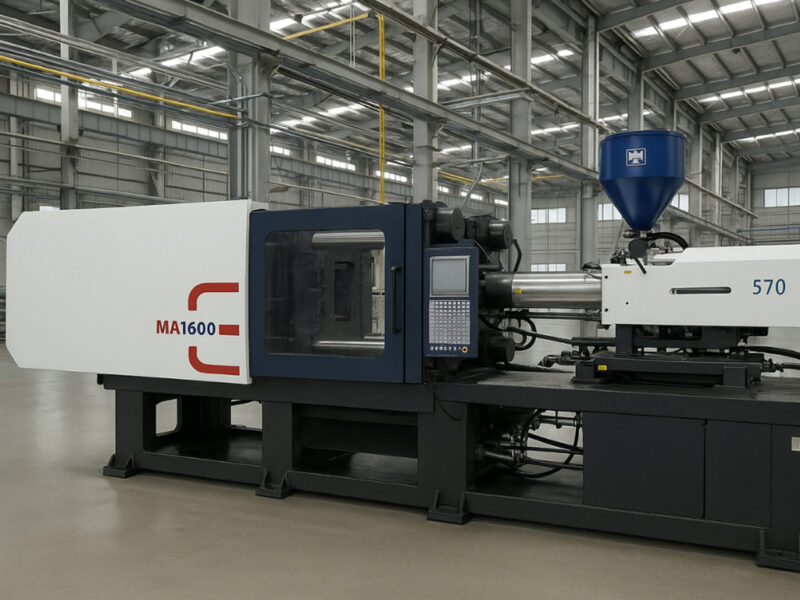
A hydraulic injection molding machine uses a hydraulic system to open/close the mold and generate clamping force. The entire operating process-from screw rotation and plastic injection to ejecting parts-is driven by pumps, valves, motors, and recirculating hydraulic oil.
Basic construction
A typical hydraulic injection molding machine includes:
- Hydraulic system: Oil pump, pressure valves, piping, and oil reservoir that generate and maintain clamping and injection forces.
- Injection unit: Hopper, screw, and heated barrel to melt plastic and deliver it into the mold.
- Clamping unit: Closes and holds the mold tightly throughout the molding cycle.
- Ejection system: Removes the part from the mold after it has formed.
- Control system: HMI or electronic control panel for setting molding parameters.
Operating principle
Hydraulic oil is pumped at high pressure through a closed-loop system. When the motor runs, oil drives the hydraulic cylinders. The hydraulic force actuates mold open/close and rotates/advances the screw so that molten plastic is injected into the cavity. The plastic then cools and solidifies; the mold opens and the part is ejected. This cycle repeats continuously to ensure productivity.

Pros and cons
Key advantages of hydraulic injection molding machines:
- High clamping force-ideal for large, thick-walled parts.
- Long service life, low failure rate, and readily available spare parts.
- Lower initial investment than all-electric machines.
- Stable shot-to-shot performance suitable for many industrial products.
Limitations to consider:
- Higher power consumption than electric and servo-hydraulic machines.
- Higher noise; requires more floor space.
- Accuracy generally below that of all-electric machines for ultra-precise parts.
How much do hydraulic injection molding machines cost?
Pricing depends on tonnage, brand, and whether the machine is new or used. A 160-ton press typically costs around VND 370–450 million. Larger machines start from about VND 1.2 billion. European and Japanese brands are priced higher, but offer superior durability and accuracy.
Six Quality, Good-Value Hydraulic Injection Molding Machines
There are many hydraulic presses available from domestic and international brands. Each has its strengths and suits different production needs and budgets. Below are six popular, high-quality models widely chosen for industrial production:
Haitian Hydraulic Injection Molding Machines
Haitian is a leading Chinese brand known for competitive pricing and a broad tonnage range. The Mars III (MA series)-for example, the MA1600 III-is widely used in Vietnam thanks to stable performance and reasonable investment cost.
- Highlights: 80–3,000 tons clamping force, stable operation, simple construction, easy maintenance.
- Applications: Packaging, pallets, household goods, plastic trash bins.
- Indicative price: Approx. VND 350 million – 2.5 billion.

Yizumi Hydraulic Industrial Presses
Yizumi is a Chinese brand known for hydraulic and servo-hydraulic presses. Its Topstar line is favored for modern design, stable performance, and cost-effective investment.
- Highlights: Servo-assisted hydraulic system for significant energy savings, stable operation, and high accuracy.
- Applications: Packaging, household goods, electronic components, and industrial plastic parts.
- Indicative price: Approx. VND 860 million – 2.5 billion.

Chen Hsong Hydraulic Injection Molding Machines
Chen Hsong, headquartered in Hong Kong with factories in Taiwan and China, is one of the world’s leading press makers. With over 60 years of experience, the company’s hydraulic lines are renowned for quality, durability, and stable performance.
- Highlights: Precise Japanese hydraulic technology, rigid construction, optional variable-displacement or servo pumps for energy savings.
- Applications: Pallets, trash bins, household goods, packaging, and various industrial plastic components.
- Indicative price: Diverse and competitive in mid- to high-range segments.

JSW Hydraulic Injection Molding Machines
JSW (Japan Steel Works) is a renowned Japanese brand supplying large hydraulic and hybrid presses. With powerful clamping and excellent stability, JSW presses are widely chosen for heavy-duty industrial molding.
- Highlights: Clamping forces from hundreds to thousands of tons; robust design; high accuracy.
- Applications: Automotive components, industrial equipment housings, and engineering plastics.
- Indicative price: Approx. VND 1 – 4 billion.

Sumitomo Hydraulic Injection Molding Machines
Sumitomo (SHI) Demag-combining Japanese and German expertise-stands out with its Systec hydraulic line using servo-hydraulic technology. It offers a balance of performance, precision, and energy efficiency and is a popular choice among plastic manufacturers.
- Highlights: 180–6,000 tons clamping force; quiet operation; flexible control.
- Applications: Automotive parts, engineering plastics, industrial packaging.
- Indicative price: Approx. VND 1 – 4 billion.

Engel Hydraulic Thermoplastic Molding Machines
Engel is a premium Austrian brand well known across Europe and worldwide. With advanced hydraulics and intelligent controls, Engel machines suit both high-volume production and high-precision engineering plastics.
- Highlights: Wide clamping range, high accuracy, long service life.
- Applications: Medical, automotive, electronics, and high-end plastics.
- Indicative price: Approx. VND 1.5 – 5 billion.

Hydraulic injection molding machines remain essential in the plastics industry thanks to their strong clamping force, reasonable investment costs, and capability to produce large parts. Depending on needs and budget, businesses can choose among reputable brands. Investing in the right machine not only boosts productivity but also ensures long-term product quality.
Reference: The most common types of industrial injection molding machines