

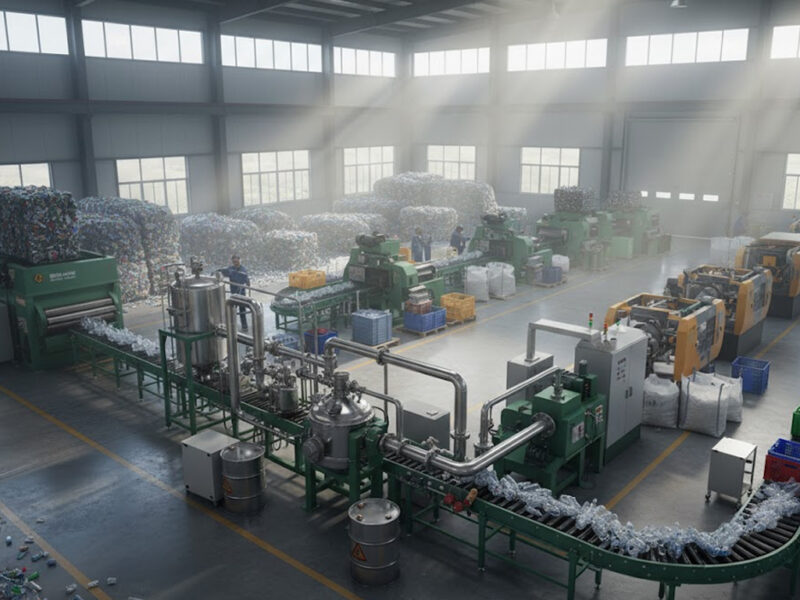
Plastic recycling has become an inevitable trend as waste pollution grows increasingly severe and fossil resources gradually decline. This activity not only helps protect the environment but also provides an important material source for modern manufacturing. In the article below, Thai Duong Plastics will help you clearly understand what plastic recycling is, how the process is carried out, and why it is a sustainable direction for the future.
What Is Plastic Recycling?
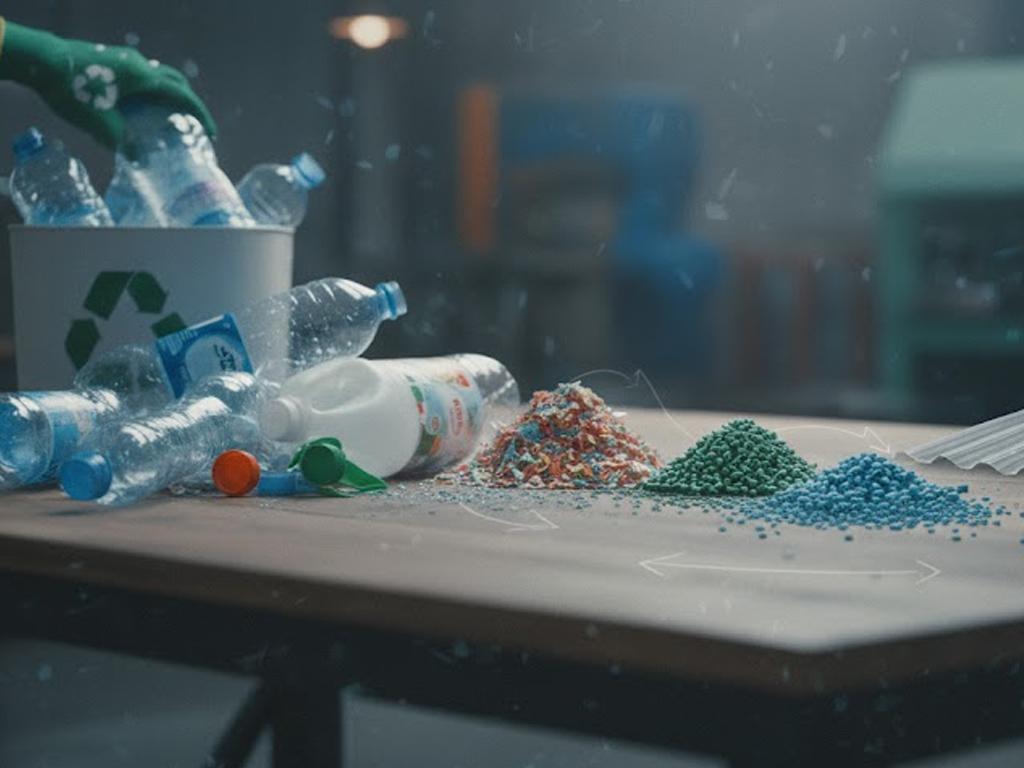
Plastic recycling is the process of collecting, processing, and reusing used plastic products or industrial plastic scrap to create new raw materials for manufacturing. Recycled plastics can be used to produce packaging, household items, industrial components, synthetic fibers, and more.
Plastic recycling helps reduce the amount of hard-to-decompose waste, limit greenhouse-gas emissions, and save energy compared to producing virgin plastic. It is also an important step in the circular economy model that many businesses are working toward.
Benefits of Plastic Recycling
Plastic recycling delivers significant value in both environmental and economic terms. First, it greatly reduces the volume of plastic waste accumulating in the environment, helping to limit pollution of soil, water, and air. Because plastic decomposes very slowly, recycling is an effective way to ease the burden on ecosystems.
In addition, recycling plastic helps conserve petroleum, the primary feedstock for plastic production. The recycling process consumes less energy and emits less CO2 than producing virgin plastic. Beyond environmental benefits, recycling also creates substantial economic value: businesses can reuse scrap as new input materials, reduce production costs, and create more jobs in waste collection and processing.
Types of Plastics That Can Be Recycled
Not all plastics can be recycled effectively. Below are some common plastic groups that are widely processed in the recycling industry:
- PET: Commonly used for drinking bottles and food containers. It is highly recyclable and can produce products with good clarity, making it especially suitable for recycling into fibers and new bottles/containers.
- HDPE: Used for plastic jerrycans, pipes, bottle caps, etc. It offers high durability and strong chemical resistance.
- PP: Heat-resistant and mechanically durable, widely applied in packaging, plastic boxes, and technical equipment.
- PVC and PS: Can be recycled, but the process is more complex; they are typically recycled mainly for industrial applications and construction materials.
Read more: What Is Recycled Plastic? Characteristics of Recycled Plastics
The Most Detailed Plastic Scrap Recycling Process
Today’s plastic recycling process is standardized to ensure the quality of recycled materials. Each stage plays an important role in restoring the properties of plastic:
Step 1: Collection and Pre-Sorting
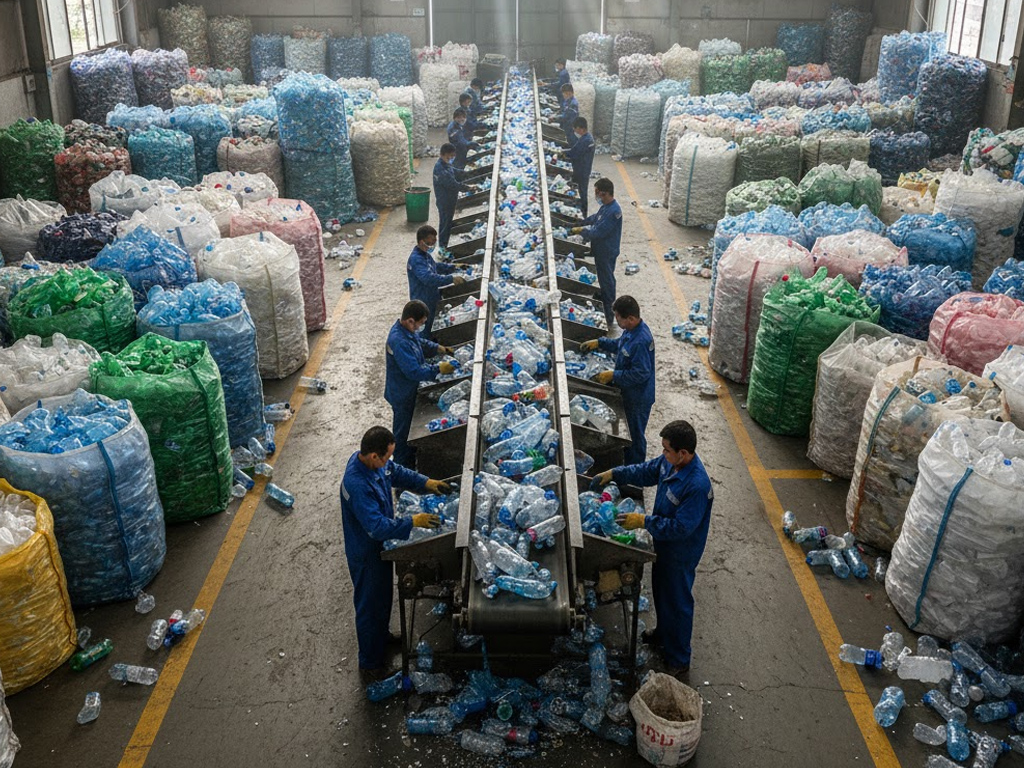
Plastic waste is collected from households, industrial zones, factories, and production facilities. It is then pre-sorted to remove sand, paper, metals, and other contaminants.
Step 2: Plastic Classification
Plastics are classified by technical codes such as PET, HDPE, PVC, PP, PS, and so on. Proper sorting ensures uniformity of the input stream, which improves the quality of recycled products. At industrial scale, this stage often uses optical technology or infrared sensors for fast and accurate identification.
Step 3: Shredding
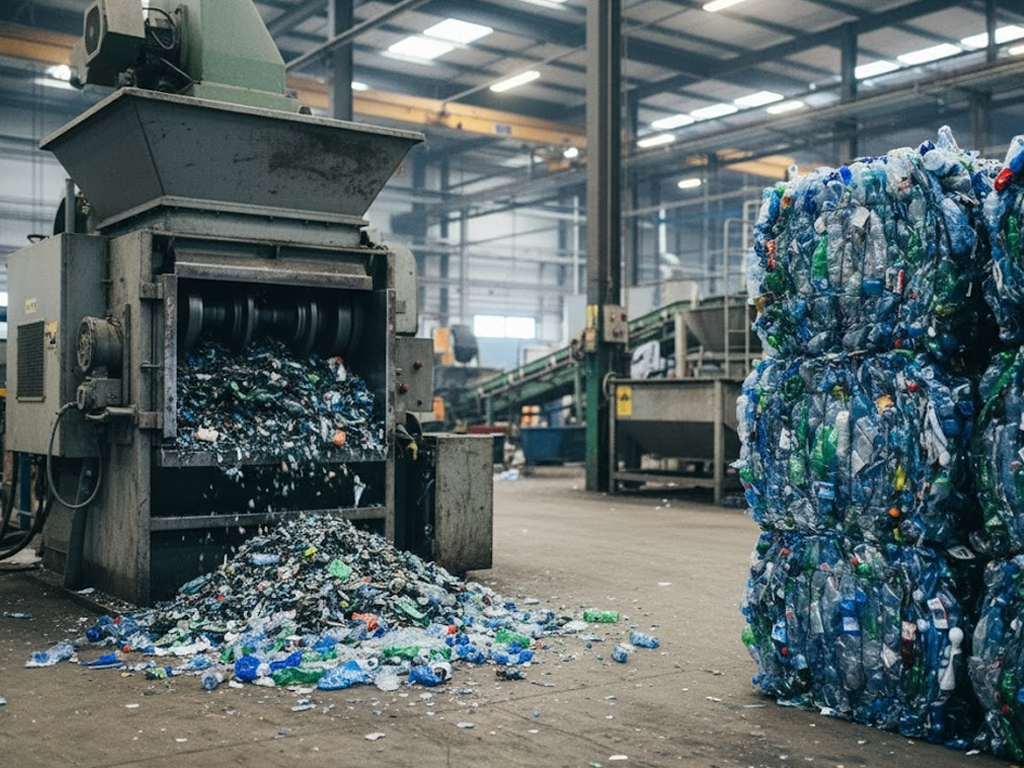
Plastics are fed into shredders and ground into small flakes to facilitate cleaning and melting. Flake size is typically kept consistent to ensure stable quality in the later extrusion and pelletizing stage.
Step 4: Washing and Sanitization
Plastic flakes are washed in hot water to remove dirt, adhesives, and residual oils/grease. They are then sanitized to ensure safety and hygiene-especially for recycled plastics intended for food-related applications or packaging.
Step 5: Melting and Pelletizing
Clean plastic is dried and fed into an extruder for melting. The molten plastic stream is filtered through metal screens to remove impurities, then extruded through a die, cooled, and cut into recycled plastic pellets. These pellets serve as feedstock for manufacturing new products through injection molding, extrusion, film blowing, and more.
Step 6: Manufacturing and Distribution
Recycled pellets are supplied to manufacturers of packaging, plastic components, construction materials, consumer goods, and more. This cycle enables efficient reuse of resources while reducing pressure on the environment.
Real-World Conditions and Challenges in Plastic Recycling
Although plastic recycling offers many benefits, the reality is that only a small portion of global plastic waste is recycled effectively. Many studies show that the cost of mechanical recycling can sometimes exceed the cost of producing virgin plastic, making it difficult for businesses to scale up operations.
Beyond cost factors, the diversity in plastic types and chemical compositions is another major barrier. Each plastic has a different melting temperature and set of properties, so sorting and processing require precise-and often expensive-technology. Products containing additives, colorants, or composite materials are nearly impossible to recycle using conventional processes. In addition, consumer habits have not fully shifted, and source separation remains limited, which prevents recycling systems from achieving optimal efficiency.
However, with advances in materials science, recycling technologies are gradually improving. Advanced chemical recycling and improved mechanical recycling methods can handle a broader range of plastics while reducing energy costs. Some countries also combine energy recovery from plastic waste as a parallel solution-addressing waste while generating a renewable energy source. In Vietnam, many companies have invested in internationally compliant recycled pellet production lines to serve multiple industries (injection molding, extrusion, packaging, etc.).
Despite ongoing challenges in technology, cost, and public awareness, the plastic recycling industry still has strong growth potential. Demand for recycled materials is increasing worldwide, especially as countries promote circular economy models and sustainable manufacturing.
As plastic pollution becomes a shared global challenge, recycling is not only a technical solution but also a responsibility of society as a whole. Promoting source separation, investing in modern technologies, and encouraging the use of recycled products will help reduce waste, protect the environment, and move toward green growth. This is also the path modern plastics manufacturers should pursue to create sustainable value for the future.
Continue reading: Properties of Plastics and Their Applications in Manufacturing