

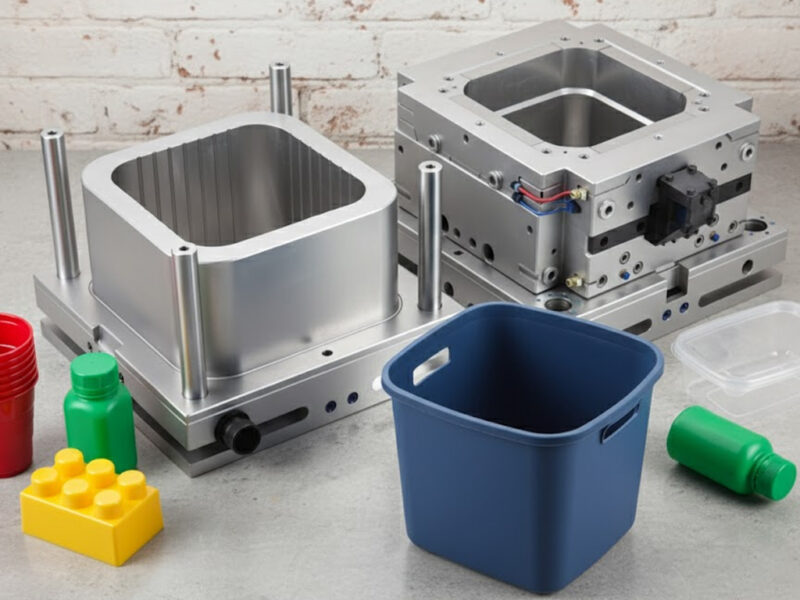
Extrusion blow molding is one of the most important technologies for manufacturing packaging and hollow plastic products. Thanks to its precise forming capability, reasonable cost, and high production speed, this technology is increasingly applied across consumer goods, food, pharmaceuticals, and chemicals. In this article, Thai Duong Plastics will help you understand the fundamentals, operating process, classifications, and the key technical factors in today’s blow molding technology.
Overview of Blow Molding Tooling in the Plastics Industry
Extrusion Blow Molding (EBM) is a manufacturing process used to produce hollow plastic products such as shampoo bottles, shower gel bottles, chemical bottles, and containers. In this process, plastic is melted and extruded into a hollow tube called a parison. The mold then closes, and compressed air is blown inside to force the plastic to conform to the mold cavity, forming the product as designed.

Materials used for blow molding are primarily thermoplastics that offer good heat resistance and stretchability:
- Most common is HDPE, known for flexibility and high impact resistance-often used for shampoo and chemical bottles.
- PP offers heat resistance and chemical resistance, making it suitable for food and pharmaceutical packaging.
- PVC is stable and suitable for technical products.
- TPE and polycarbonate are used for products requiring high transparency and high resilience/elasticity.
Read more: What Is Blow Molding? A–Z Detailed Guide
Classification of Extrusion Blow Molding (EBM)
Extrusion blow molding is commonly divided into two main types, differing in how the plastic is extruded and handled during production.
- Continuous extrusion blow molding
Plastic is extruded continuously while the machine is running. The parison is formed continuously and cut into sections to be fed into the mold. This method is suitable for materials with high melt strength and short cycle-time requirements, helping increase productivity.
- Intermittent extrusion blow molding
Plastic is accumulated in a chamber and pushed out in batches using a piston. The mold then closes and air is blown in to form the product. This method is suitable for materials with low melt strength and products with longer production cycles, allowing better control of bottle wall thickness.
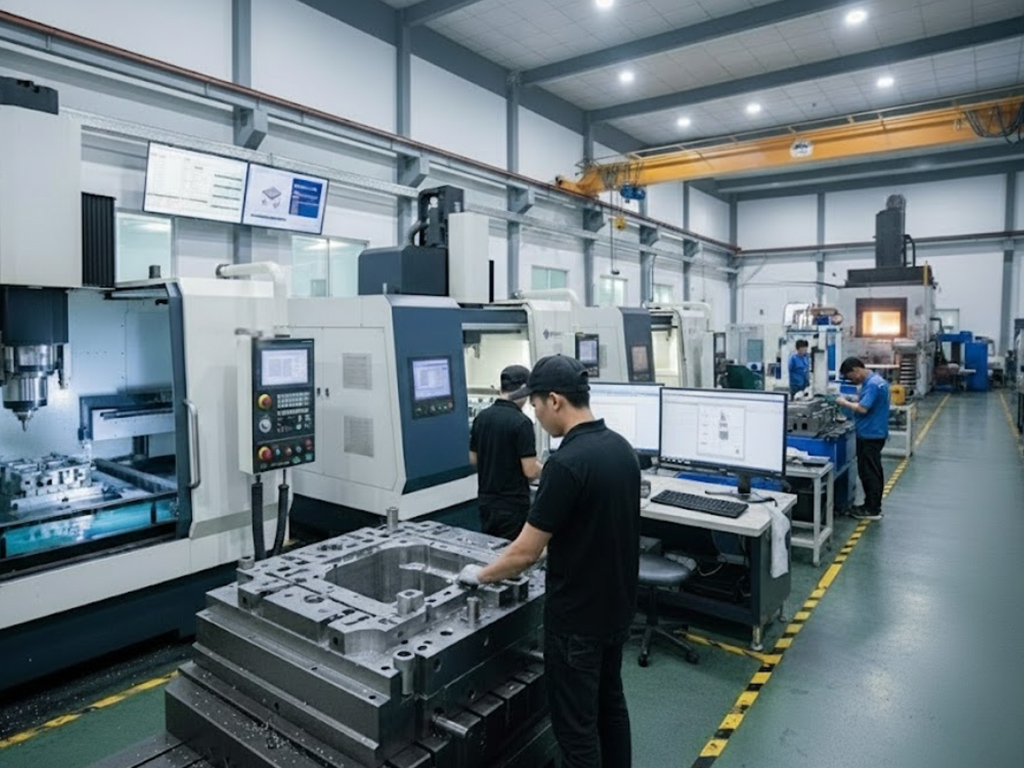
Extrusion Blow Molding vs. Stretch Blow Molding
In addition to extrusion blow molding, plastic bottle manufacturing also widely uses Stretch Blow Molding (SBM)-especially with PET. These two methods differ in workflow and application:
- Extrusion Blow Molding (EBM)
The preform is created as an extruded tube (parison). The process includes plastic extrusion, mold closing, and air blowing. This method typically uses materials such as HDPE, PP, PVC, TPE, etc. The resulting products generally have thicker walls and high mechanical strength, suitable for shampoo bottles, chemical bottles, and technical containers.
- Stretch Blow Molding (SBM/ISBM)
The preform is injection molded into a “preform,” then reheated, stretched, and blown to final shape. This technology is common with PET, producing highly transparent products with thin, uniform walls and lightweight structures. Typical applications include bottles for drinking water, soft drinks, and food products.
How an Extrusion Blow Mold Works
A typical blow molding process for hollow plastic products includes the following basic steps:
- Step 1: Create the parison-plastic pellets are melted and extruded into a hollow tube.
- Step 2: Close the mold-the two mold halves close and clamp the parison at both ends.
- Step 3: Blow air-compressed air is introduced inside, inflating the parison so the plastic presses against the mold surface.
- Step 4: Cooling-the part is cooled in the mold to stabilize its shape.
- Step 5: Eject the product-once the plastic hardens, the mold opens and the product is removed manually or by robot.

Pros and Cons of Extrusion Blow Molds
Extrusion blow molding offers many advantages for industrial production:
- Lower mold cost than injection molding due to lower pressure; molds can be made from aluminum.
- Easy to produce hollow and complex shapes without assembling multiple parts.
- Allows multi-layer structures to improve barrier properties and reduce raw material costs.
- Recycled material can be used in the middle layer while maintaining surface quality.
- Well-suited for high-volume production with high productivity and low unit cost.
- Flexible design that adapts easily to a wide range of products.
Besides the advantages, extrusion blow molds also have technical limitations to consider.
- More difficult to control uniform wall thickness in curved regions and at mold corners.
- Dimensional tolerances are generally looser than plastic injection molding because the product contacts the mold on only one side.
- Flash (burrs) can occur and must be trimmed after molding.
- Secondary operations may be required, such as trimming, drilling, and surface finishing.
- Large flat surfaces may warp, especially when the material lacks sufficient melt strength.
Key Technical Parameters
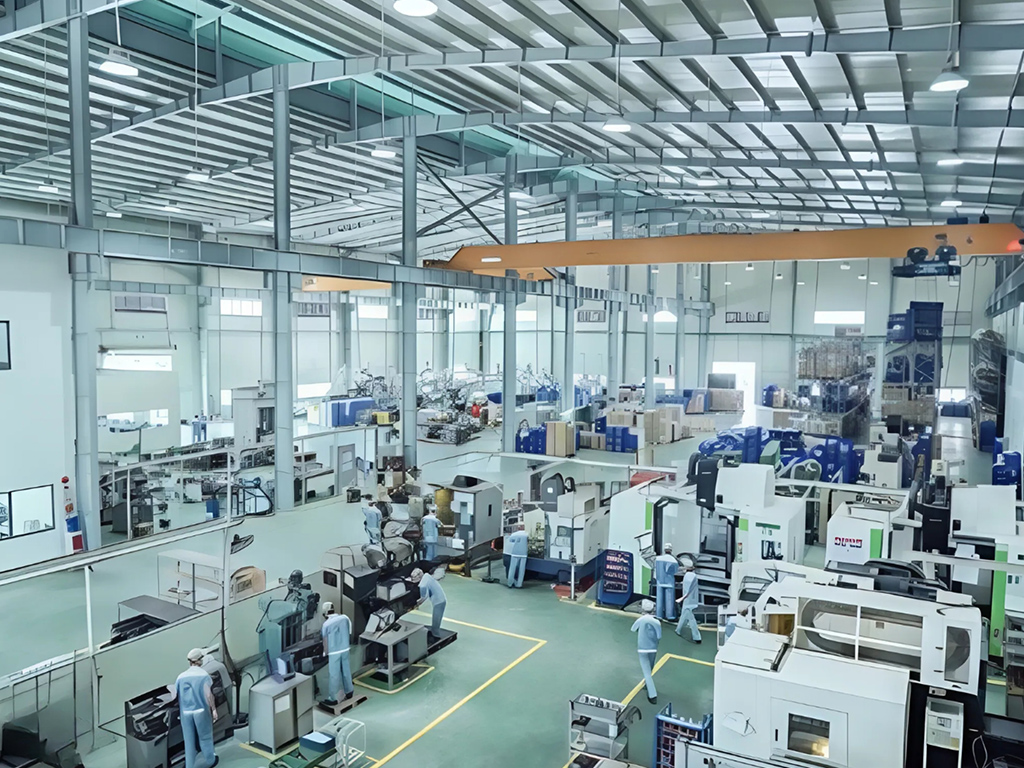
To achieve stable product quality, engineers must tightly control the following parameters:
- Melt temperature directly affects viscosity and the plastic’s formability.
- Blow pressure determines how well the plastic adheres to the mold and influences wall thickness.
- Extrusion speed impacts throughput and parison stability.
- Cooling time affects dimensions, hardness, and surface gloss.
- Parison programming enables localized thickness adjustment to prevent sagging and thinning.
When applied with suitable materials and an optimized process, extrusion blow molding helps improve quality, reduce costs, and maintains an essential role in modern plastics manufacturing. If you have questions or need detailed consultation on blow mold design, fabrication, and machining, Thai Duong Plastics is ready to support you with an experienced engineering team and optimized solutions for each production requirement.