

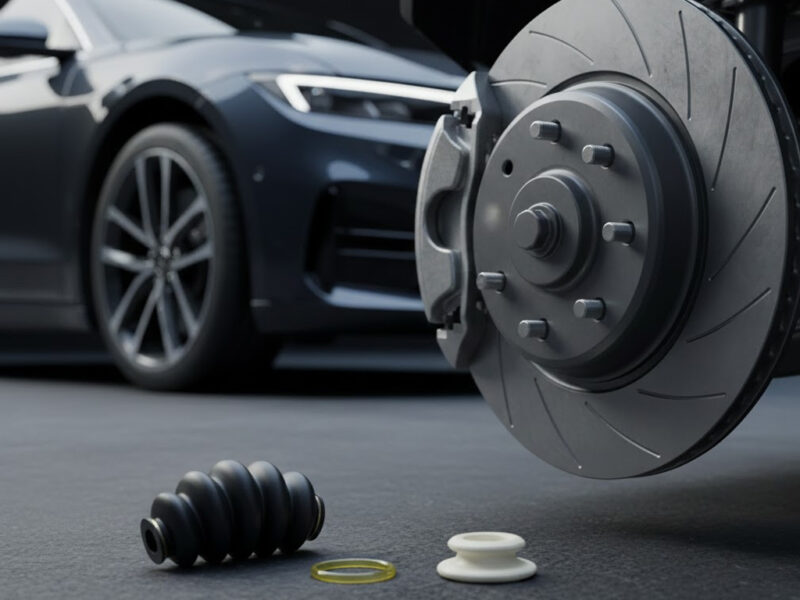
In an automotive braking system, rubber parts may be small, but they play a critical role in ensuring sealing integrity, pressure stability, and long-term durability. As modern vehicles demand higher levels of safety, service life, and performance under harsh operating conditions, rubber materials used in brake systems must be selected more carefully. In this article, Thai Duong Plastics analyzes the applicability of HNBR rubber in automotive brake systems based on practical manufacturing experience.
Operating conditions for rubber components in an automotive brake system
An automotive brake system is a combination of mechanical and hydraulic assemblies that slow down or stop a vehicle by generating friction at the wheels. When the driver presses the brake pedal, pressure is created in the master cylinder and transmitted through brake fluid to the wheel brake units, producing braking force.
During operation, rubber components in the brake system must withstand multiple adverse factors such as high temperatures generated during braking, constantly changing pressure, vibration, moisture, ozone, and external dust and dirt. In addition, some parts are exposed to brake fluid or lubricating grease, requiring long-term chemical and mechanical stability.
These conditions mean that selecting rubber for brake systems cannot be based on elasticity alone-it must also account for heat resistance, aging resistance, and reliability throughout the product’s service life.

The role of brake fluid and its impact on rubber material selection
In today’s hydraulic brake systems, DOT 3, DOT 4, and DOT 5.1 brake fluids are primarily glycol-ether based, serving to transmit pressure while operating at elevated temperatures. Because this medium is hygroscopic and chemically active, rubber materials used for direct sealing components must maintain stable compatibility throughout operation.
With glycol-based brake fluids, EPDM is still the preferred material for seals and gaskets that directly contact the fluid, while HNBR is not used for these positions due to limitations in chemical compatibility. Conversely, HNBR shows clear advantages in areas exposed to mineral-oil-based fluids, lubricating greases, and locations subject to high temperature and vibration within the brake system.
Therefore, when evaluating HNBR applications in automotive brake systems, it is essential to distinguish the actual working media and the function of each component. Selecting the right material for real operating conditions helps ensure durability, sealing performance, and overall safety throughout the system’s lifetime.
Advantages of HNBR rubber in automotive brake systems
HNBR is an engineered rubber developed from NBR through hydrogenation, which significantly improves heat resistance, mechanical strength, and resistance to ozone and aging. These properties make HNBR suitable for many rubber components in the automotive industry, including certain parts within brake systems.
In brake-related environments, HNBR performs well in the following aspects:
- Maintains stable mechanical properties at higher temperatures than standard NBR.
- Provides strong abrasion and tear resistance for components under continuous motion.
- Resists ozone and environmental aging, reducing cracking during long-term service.
- Offers good compatibility with many lubricating greases and mineral-oil-based fluids.
These advantages make HNBR a strong candidate for components that are not continuously immersed in DOT brake fluid, yet still face heat and harsh operating environments.
Suitable application positions for HNBR rubber in brake systems
In automotive brake systems, HNBR is effectively applied in positions exposed to high heat, vibration, and environmental aging:
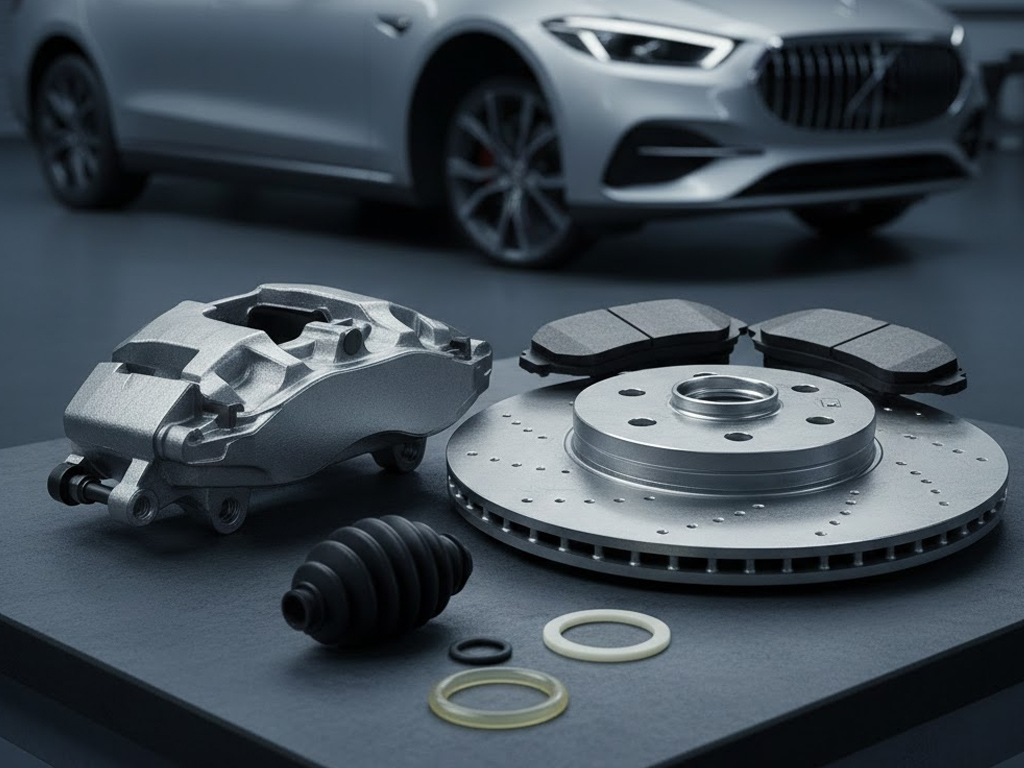
- Dust boots and protective seals for disc brake calipers (Caliper Boots)
Caliper dust boots and protective seals act as key barriers that prevent water, mud, and contaminants from entering the brake piston area. Located close to the brake disc, these parts are exposed to intense radiant heat, ozone-driven aging, and continuous mechanical deformation during operation.
Thanks to its superior heat resistance and tear strength, HNBR helps these parts remain flexible over time without hardening or cracking. Using HNBR in this position helps keep the piston area clean, ensuring accurate and safe brake response.
- Seals and washers in grease-lubricated brake mechanisms
In electronic parking brake (EPB) assemblies and sliding mechanisms, sealing parts frequently contact specialized greases, especially lithium-based greases. HNBR offers excellent grease resistance, helping seals retain their dimensions and preventing swelling or mechanical degradation under grease exposure.
This is particularly important in gear-driven actuators used in modern brake systems, where even minor seal deformation can cause sticking or jamming. HNBR helps the system run smoothly and reliably while significantly reducing maintenance costs.
- Brake systems using mineral-oil-based media
In certain specialized applications that use mineral-oil-based hydraulic fluid instead of DOT brake fluid, HNBR is an optimal sealing solution. With excellent resistance to mineral oils, HNBR ensures tight sealing and good pressure resistance, maintaining stable performance for auxiliary hydraulic systems in automotive applications.
Key limitations to note when using HNBR in brake systems
Although HNBR offers strong mechanical durability and heat resistance, it is not suitable for every position in an automotive brake system. When considering HNBR, pay close attention to the following technical limitations:
- HNBR is not a direct replacement for EPDM in sealing parts that frequently contact glycol-based DOT brake fluids.
- Using HNBR for seals, cup seals, and gaskets immersed in brake fluid requires chemical-compatibility evaluation and real-world testing before implementation.
- In incompatible brake-fluid environments, HNBR may swell, change hardness, and lose mechanical performance.
- Sealing ability and dimensional stability can be compromised if the compound formulation is incorrect or operating conditions exceed the design range.
- Incorrect material selection can reduce overall safety and directly impact brake-system reliability.
Selection and manufacturing criteria for HNBR brake components
To ensure HNBR rubber parts meet technical requirements and operate stably throughout the product lifecycle, businesses should consider the following when deploying HNBR for suitable brake components:
- Clearly define the component’s real operating environment, including temperature, vibration, and the contact media.
- Select appropriate hardness and compounding to balance durability and assembly performance.
- Prefer peroxide curing over sulfur curing to reduce compression set. This helps seals retain elasticity and prevents collapse or deformation during prolonged high-temperature service.
- Conduct thermal aging tests, media exposure tests, and dimensional-tolerance control during manufacturing.

HNBR is a high-performance technical rubber with advantages in mechanical strength, heat resistance, and aging resistance. It is suitable for many applications in automotive brake systems-especially protective parts and mechanisms operating under high temperature and vibration. Thai Duong Plastics specializes in manufacturing HNBR rubber products tailored to the technical requirements of each application. Contact us for material consultation and optimized manufacturing solutions for brake systems and other technical rubber components.
Read more: The role and applications of rubber in the automotive industry