

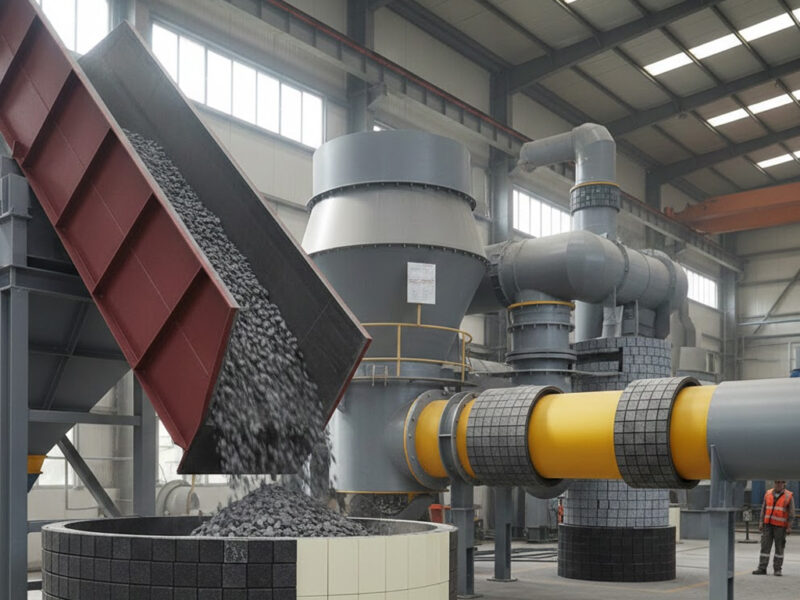
In cement production, abrasion is one of the main causes of damage to chutes, hoppers, pipelines, and other components throughout the line. Abrasion-related damage not only increases maintenance costs, but also creates a risk of unplanned downtime-directly affecting operational efficiency. Thai Duong Plastics provides rubber wear-resistant solutions engineered for each working position, helping maximize equipment service life and stabilize operation across the entire production line.
How abrasion affects equipment in cement plants
Before selecting an abrasion-protection material, it is essential to correctly identify the wear mechanism at each position in the line. During production, bulk materials such as clinker, limestone, sand, coal, fly ash, and others are conveyed at high throughput and high speed, often changing direction-creating multiple types of wear:
- Sliding abrasion
Sliding abrasion occurs when powder or granular material continuously moves along surfaces such as chutes, bunkers, and pipelines. This wear mode causes uniform wear along the flow direction, leading to wall thinning and eventual perforation after a period of operation.
- Impact and cutting/tearing wear
This wear mode typically appears at drop zones, transfer points, directional changes, and material build-up areas. Sharp-edged particles strike the equipment wall with high intensity, which can crack hard liners, tear liner edges, and create localized perforation points in a short time.
- Erosion from dust-laden airflow
Erosion commonly occurs in cyclones, air ducts, and gas-handling systems containing fine dust. High-velocity dust particles scour metal surfaces, causing non-uniform wear that concentrates in bends, elbows, junctions, and vortex zones of the airflow.
From an operational perspective, the most important concerns are the real service life of each material at each position, installation time, fast replacement capability during short maintenance windows, and the total cost of keeping equipment running over its full operating life.
When is abrasion-resistant rubber a suitable choice?
Technical rubber has high elasticity and strong impact-energy absorption. Instead of resisting wear purely by hardness, rubber reduces surface damage by dispersing forces, limiting brittle cracking, and reducing vibration transmission.
Abrasion-resistant rubber typically performs well when:
- There is repeated impact, frequent material drop, and continuous direction changes.
- Noise and vibration reduction is required at transfer areas.
- A liner is needed that can withstand cutting/tearing and deformation without cracking.
- A modular design is needed for fast replacement to minimize downtime.
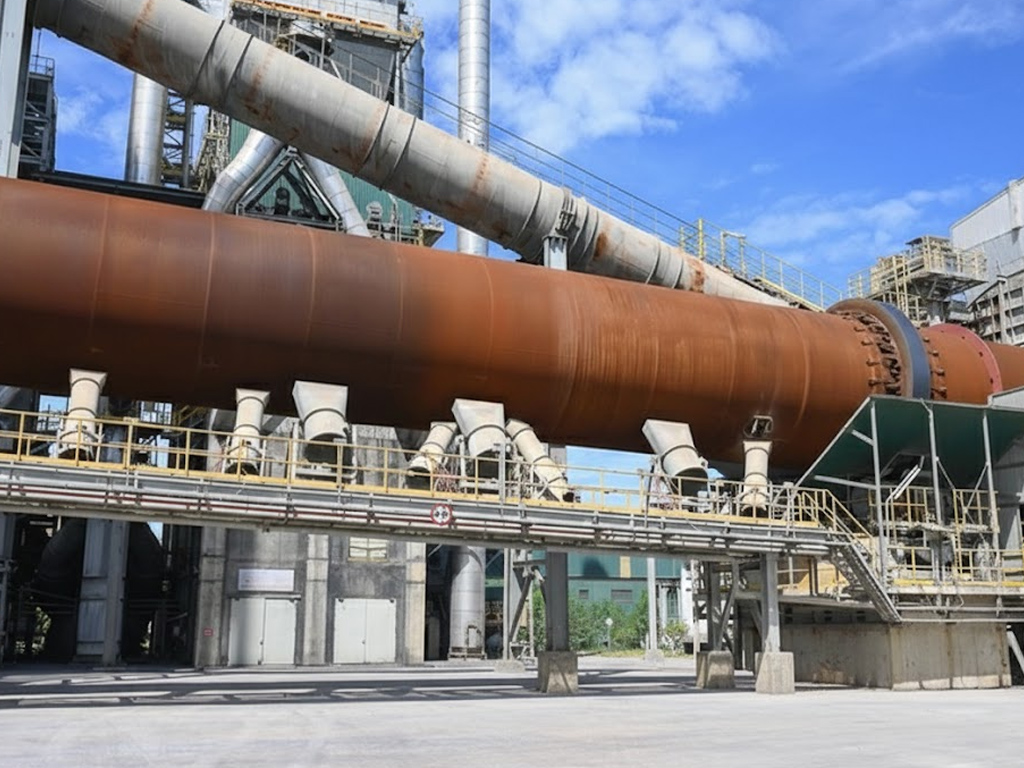
When should you avoid pure rubber and use a combined solution?
Rubber is not suitable for every position. You should consider alternative materials or combined solutions under the following conditions:
- Operating temperatures exceed 80 – 100 ºC (depending on rubber grade), causing thermal aging that makes rubber crumble or lose elasticity.
- Pure sliding wear at very high speed with almost no impact-where high-hardness, ultra-smooth surfaces are more effective.
- High-velocity dust-laden airflow in bends and vortex zones, where ceramics or rubber-ceramic configurations are often required.
- Strong chemical environments or oil/solvent exposure, requiring the correct chemical-resistant rubber system.
In practice, the optimal approach is often a combination: rubber-ceramic composite for heavy impact and severe abrasion zones, abrasion-resistant rubber for areas that need elasticity, and low-friction materials for zones prone to material build-up.
Application zoning for rubber in cement plants
Rubber is applied across multiple areas in cement plants, with configurations and properties selected to match the operating conditions of each zone:
- Chutes and transfer points
Chutes typically experience both impact and sliding abrasion, especially at drop and direction-change zones. A common solution is abrasion-resistant rubber lining to absorb impact and reduce cracking. For direct drop zones with extremely high abrasion, rubber-ceramic composite liners can be used, combined with pure rubber in other areas to optimize lifecycle cost.
- Feed hoppers, bunkers, silos, and skirts/guards
These areas experience impact and are also prone to material sticking. Abrasion-resistant rubber is used at drop zones to protect the steel shell, while UHMW PE (PE 1000) is suitable for sliding zones to reduce friction and limit build-up. The two solutions are commonly combined by real wear zones.
- Pipelines for conveying raw meal, fly ash, and fine clinker
In pipelines, wear is mainly sliding abrasion and erosion, especially at elbows. Internal rubber lining inside steel pipes increases service life compared with bare steel pipe. For heavily worn bends, liner thickness can be increased or a rubber-ceramic configuration can be applied.
- Cyclones, air ducts, and dusty gas channels
This is an erosion zone caused by dusty airflow, sometimes combined with chemical corrosion. Rubber is only suitable when temperature and particle velocity remain within allowable limits; in many cases, ceramics and rubber-ceramic composite liners are more effective.
- Milling areas and discharge housing
Mill discharge housings face high-velocity flow, direction changes, and many sharp particles. Abrasion-resistant rubber helps reduce cracking in hard liners; for exceptionally severe wear zones, rubber-ceramic composite liners often deliver better operational results and lifecycle cost.
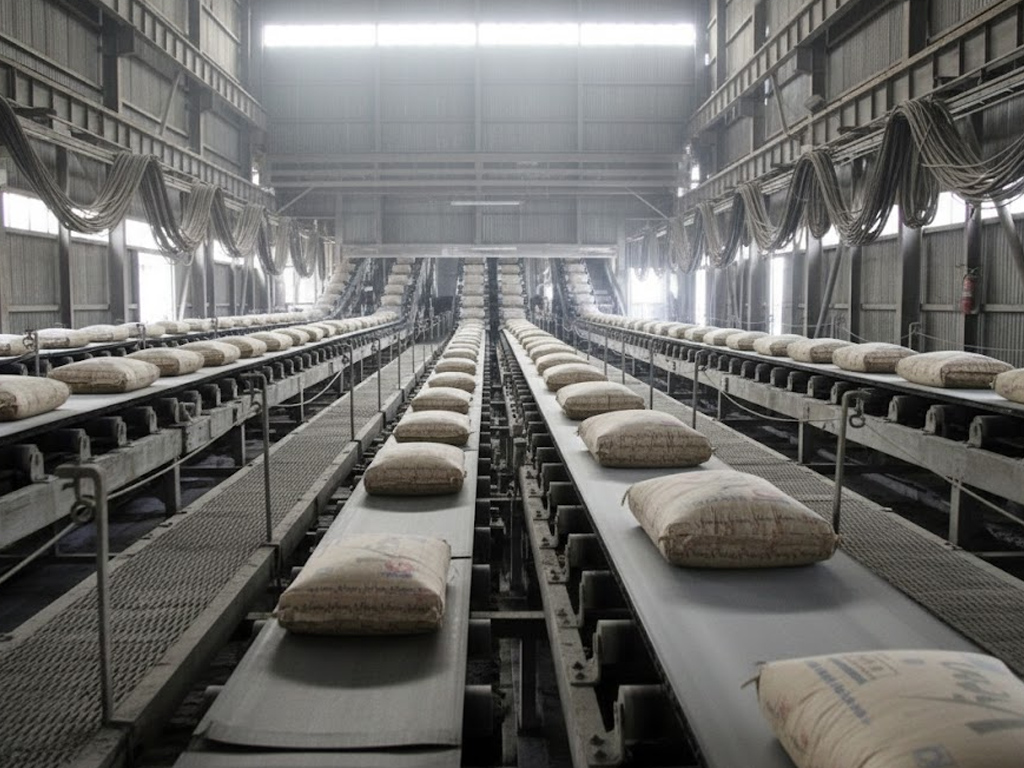
Practical abrasion-resistant rubber solutions
Depending on operating conditions and wear severity at each position, abrasion-resistant rubber solutions are implemented in different configurations to balance service life, installation practicality, and lifecycle cost:
- Abrasion-resistant rubber liner sheets/plates
Rubber liner sheets are used for chutes, hoppers, and bunker walls. Selection should balance Shore A hardness to both absorb impact and avoid cutting/tearing, while ensuring tensile strength, tear resistance, and low abrasion loss per DIN ISO 4649.
- Rubber-ceramic composite lining
Rubber-ceramic composite lining is suitable for zones with both impact and extremely high abrasion. The ceramic layer provides strong wear resistance, while the rubber backing dampens impact and helps reduce cracking. Performance depends on ceramic geometry, coverage density, bonding quality, and modular design.
- Rubber lining for pipes and equipment
Rubber lining is applied to pipelines, pumps, and valves operating in abrasive environments. The correct rubber system must be selected based on temperature and chemical exposure, and the appropriate processing method (e.g., cold bonding or vulcanized lining) should be considered to ensure bond durability.
- UHMW PE liner panels for anti-sticking and low friction
UHMW PE is suitable for zones requiring smooth sliding and reduced sticking. This material does not replace rubber in heavy impact zones and should be combined by wear zoning.
Reference: The most important rubber applications in industry
Key technical criteria to control to avoid early failure
To achieve the intended service life and ensure real-world performance, several key technical factors should be controlled from the evaluation and design stage:
- Correctly identify the wear mechanism at each position.
- Design liner panels and replacement methods appropriately, prioritizing modular formats.
- Ensure proper surface preparation and bonding quality during installation.
- Select thickness and configuration based on real operating conditions-not intuition.
Selecting rubber solutions by wear zones
In cement plants, each area in the line has different wear characteristics and operational requirements. Therefore, selecting rubber solutions should be based on specific wear zoning:
- Drop and direction-change zones such as chutes, hoppers, and transfer chutes typically experience both impact and sliding abrasion-well-suited to abrasion-resistant rubber for impact absorption, and rubber-ceramic composite liners when wear and impact reach very high thresholds.
- Long sliding surfaces with low impact but high sticking risk such as bunker walls and hopper sides should combine rubber with UHMW PE to reduce friction, limit caking, and prevent blockages.
- Pipelines conveying raw meal and fly ash mainly experience sliding abrasion and off-axis erosion-proper rubber lining increases service life and reduces localized perforation risk, especially at bends.
- Erosion zones caused by dust-laden airflow such as cyclones and air ducts require consideration of operating temperature and particle velocity to choose between rubber, rubber-ceramic composites, and ceramic wear materials.
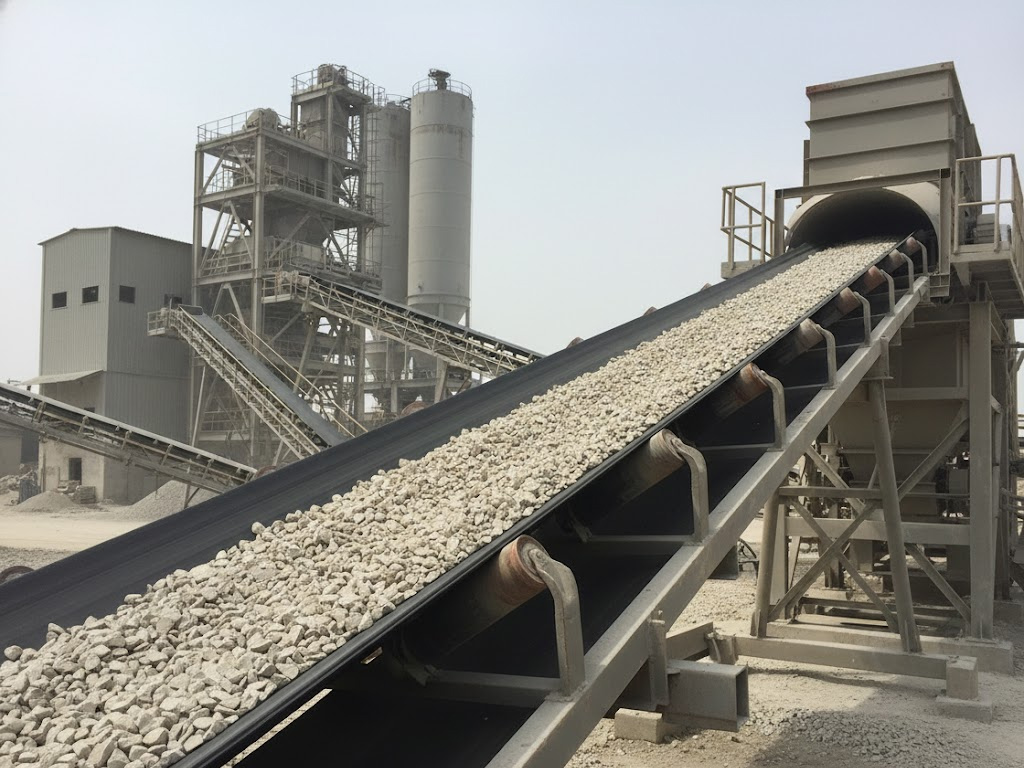
In real operations, the value of abrasion-resistant rubber solutions lies in extending run time and controlling maintenance costs over the equipment lifecycle. When implemented correctly and matched to specific operating conditions, rubber solutions reduce unplanned downtime risk and improve line stability. For consultation on the right solution for each position in your cement plant, contact Thai Duong Plastics for site assessment support and an optimized configuration proposal.
Read more: Custom rubber fabrication on demand