

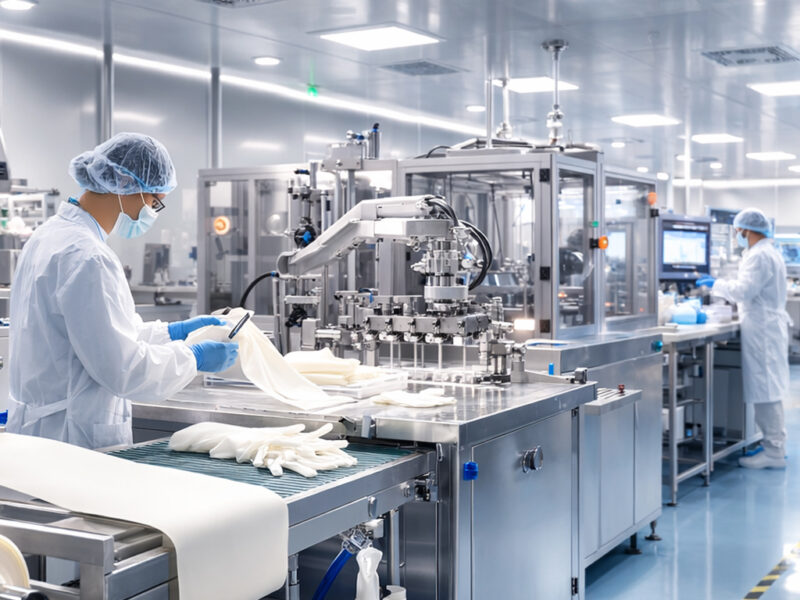
In the medical device industry, rubber components must not only meet mechanical durability requirements, but also maintain absolutely clean surfaces, batch-to-batch consistency, and clear traceability. Risks such as particulate contamination, cross-contamination between materials, or uncontrolled packaging can compromise product quality even when molding parameters meet specifications. Cleanroom medical rubber solutions are implemented to control these risks and maintain stable outgoing quality.
What is cleanroom medical rubber in manufacturing?
In rubber processing lines for the medical industry, not every part of the workshop needs to meet a high cleanliness classification. Environmental control is typically focused on the stages that directly affect the product’s surface condition and purity, especially after the rubber part has completed vulcanization.
Cleanroom medical rubber refers to components that are handled, inspected, and packaged in an environment where airborne particle concentration is controlled in accordance with ISO 14644. The core objective is to keep the airborne particle count as low as possible and prevent contaminants from entering the final finishing stages.
In cleanroom manufacturing for medical rubber, confusion between the concepts below can lead to incorrect investment decisions and misjudgment of quality requirements. Therefore, businesses need to clearly define each control scope before implementation:
- A cleanroom focuses on controlling airborne particles and air conditions.
- Sterility relates to microbial control and a separate sterilization process, depending on the product requirements.
In practice, cleanrooms are commonly used for visual inspection, dimensional measurement, assembly of component sets, and final packaging. This production arrangement helps ensure that finished products maintain cleanliness and consistency when delivered to customers.
Why do medical rubber products need a cleanroom solution?
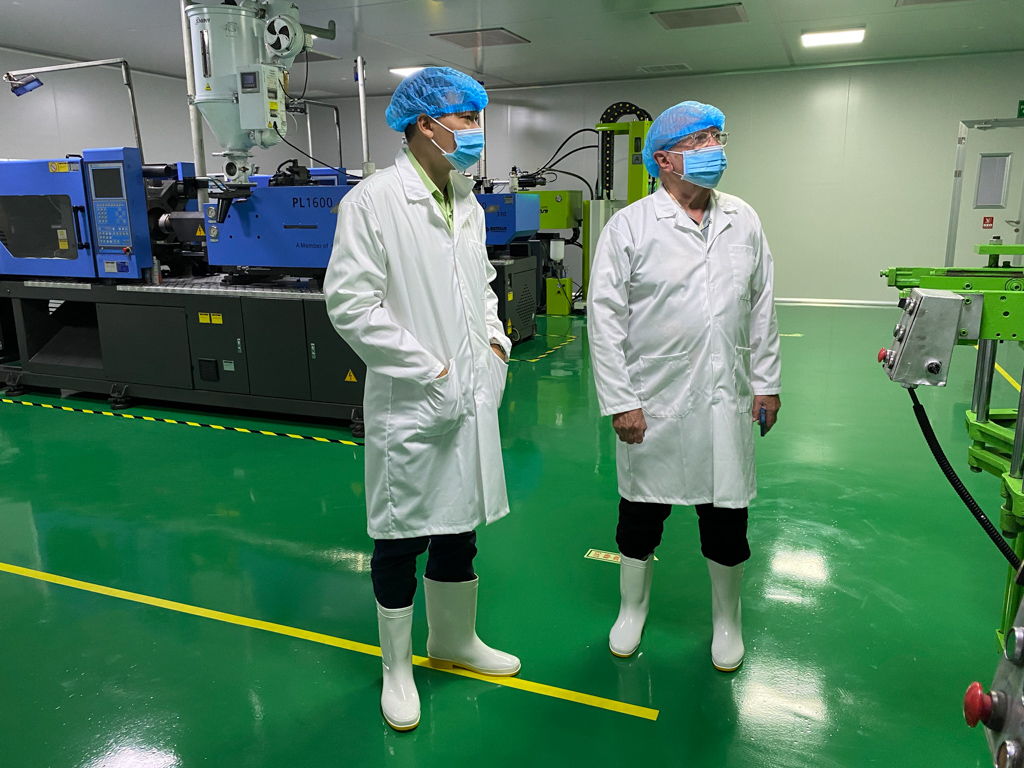
In rubber and silicone processing, quality risks often arise at the final stage, when the product already meets physical-property requirements but remains vulnerable to environmental conditions and handling. The main reasons companies implement cleanroom control for medical products include:
- Eliminating particulate contamination: Preventing dust from adhering to parts during demolding and sorting, thereby minimizing cosmetic defects.
- Preventing cross-contamination: Isolating processes to avoid mixing colors or contaminants between different rubber and silicone product lines.
- Controlling packaging materials: Eliminating dust from cartons and auxiliary materials, which are hidden contamination sources for clean products.
Scope of cleanroom application in medical rubber production lines
A cleanroom in medical rubber processing should not be deployed broadly across the entire line. The choice of which processes to place in a controlled environment should be based on the product’s sensitivity to dust and handling operations.
In practice, the stages most commonly prioritized for cleanroom control include:
- Visual inspection after demolding.
- Sorting and fine flash trimming.
- Assembly of component sets.
- Final packaging before shipment.
Dust-generating operations such as material mixing and rough cutting are kept completely isolated from the clean area. This strategy helps HEPA filtration systems operate more sustainably, concentrates control resources at the final product-contact stages, and optimizes long-term operating cost for the business.
Core features of a cleanroom medical rubber solution
To deliver real value in production, a cleanroom medical rubber solution must be built around clearly defined groups of control features. Each group is directly linked to quality risk, batch-to-batch stability, and long-term operating cost.
Environmental control in accordance with ISO 14644
This is the foundation of a cleanroom system operated to ISO 14644 Class 8, intended to maintain stable air conditions even while operators and equipment are in use, thereby reducing the risk of particles adhering to product surfaces after molding. Key technical factors include:
- An air-handling system designed according to the actual contamination load of the production area.
- A multi-stage filtration chain, from coarse filters to high-efficiency filters, to control particle concentration and optimize filter service life.
- Maintaining positive pressure relative to adjacent areas to prevent reverse contamination.
- Stable temperature and humidity conditions suitable for silicone and rubber, helping reduce static charge and minimize dust attraction on part surfaces.
Cross-contamination control in rubber and silicone processing
In medical manufacturing, cross-contamination is considered a risk that can directly affect an entire batch. For that reason, the process must be designed with clear zoning and standardized operations to maintain consistency across production lots. Common measures include:
- Zoning by material family and the sensitivity level of each product code.
- Cleaning equipment, molds, and work surfaces on defined intervals by shift and by lot.
- Tight control over changes in materials, colors, and formulations to avoid contamination.

Control of final handling and packaging
The finishing stage is where cosmetic defects are most likely to occur if operations are not properly organized. Controlling material flow and packaging operations helps preserve product cleanliness up to the point of delivery. Key control points include:
- Separating the clean packaging area from the carton-handling and raw pallet area.
- Managing all materials that directly contact the product under controlled conditions.
- Standardizing tray loading, bagging, and lot labeling procedures.
- Using dedicated pass-through chambers for material transfer to reduce direct door opening and flow crossover.
Assembly in a controlled environment
For many medical products, assembly is the stage where rubber parts directly contact other components. Performing this step in a controlled environment helps reduce the risk of particle adhesion and cosmetic defects, while preserving the clean state before final packaging.
Lot-based records and traceability system
Besides the physical environment, data control is essential to ensure full traceability and pass audit requirements. The record system should tightly manage:
- Origin: Raw-material information and lot-based issuance history.
- Operation: Actual molding parameters and first-shift/first-lot quality approval records.
- Quality: Visual inspection and dimensional measurement results.
- Delivery: Packaging lot codes directly linked to shipment history.
- Environment: Airborne particle count records and air-filtration system operating parameters.
Benefits of applying a cleanroom medical rubber solution
Implementing cleanroom control in medical rubber processing not only improves production conditions, but also brings measurable benefits in both quality and operating cost:
- Reducing cosmetic defect rates
Controlling airborne particle concentration and standardizing product-handling operations helps reduce dust adhesion, stains, and surface defects. The rejection rate due to cosmetic nonconformities can be reduced significantly, especially for parts requiring high cleanliness.
- Reducing sorting and rework costs
When products meet requirements at the finishing stage, the company does not need to repeat multiple inspection rounds. Lower re-sorting and rework requirements save labor, time, and defect-handling cost.
- Improving batch-to-batch consistency
Cross-contamination control, material-flow management, and traceability records help maintain consistency from one batch to another. This is especially important for customers that require high stability in long-term supply chains.
- Strengthening readiness for customer audits
The medical sector places more emphasis on process control than on finished-product inspection alone. Operating in a cleanroom environment with a clear record system helps demonstrate the company’s ability to manage risk when customers perform audits or supplier assessments.

How to implement cleanroom medical rubber solutions and future trends
Applying cleanroom control in medical rubber processing should be carried out with clear focus. The entire line does not need to be placed in a controlled environment. Instead, the correct stages that create product-quality risks must be identified.
The implementation process typically includes:
- Analyzing the actual defect-generation points in the production line.
- Identifying the stages most sensitive to dust and handling operations.
- Designing a focused controlled area for inspection, assembly, and packaging.
- Training personnel to comply with operating rules inside the controlled environment.
- Establishing a periodic environmental qualification plan to maintain a stable cleanroom classification.
Market requirements in the medical device sector are becoming increasingly demanding for rubber-component suppliers. International companies often prefer partners that can control the production environment according to ISO 14644 and maintain transparent traceability systems. Integrating cleanroom control into rubber-processing workflows therefore not only helps meet technical requirements but also strengthens long-term competitiveness in the supply chain.
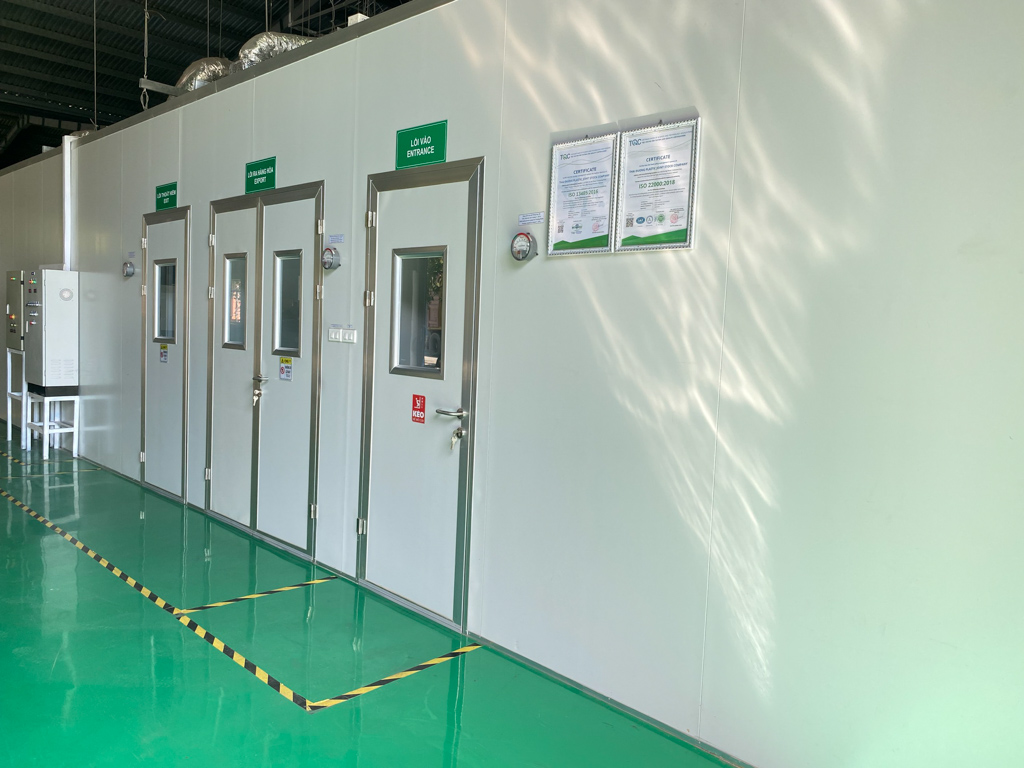
A cleanroom medical rubber solution is the foundation for ensuring stable quality, reducing cosmetic-risk factors, and meeting increasingly strict audit requirements from the medical device industry. Thai Duong Plastics is developing its capabilities in rubber and silicone processing within ISO 14644-controlled environments, together with a clear traceability system, and is ready to support businesses in projects that require high standards of cleanliness and batch consistency. Please contact us for consultation on a solution that fits your specific needs.
See more: Applications of rubber in healthcare