


Information on Filled and Unfilled Nylon Injection Molding
Nylon injection molding is one of the most widely used plastic-forming methods in modern manufacturing. In this article, Thai Duong Plastics provides detailed insights into the types of Nylon employed in plastic injection molding, appropriate mold designs, and high-efficiency production processes.
Overview of Nylon in Injection Molding
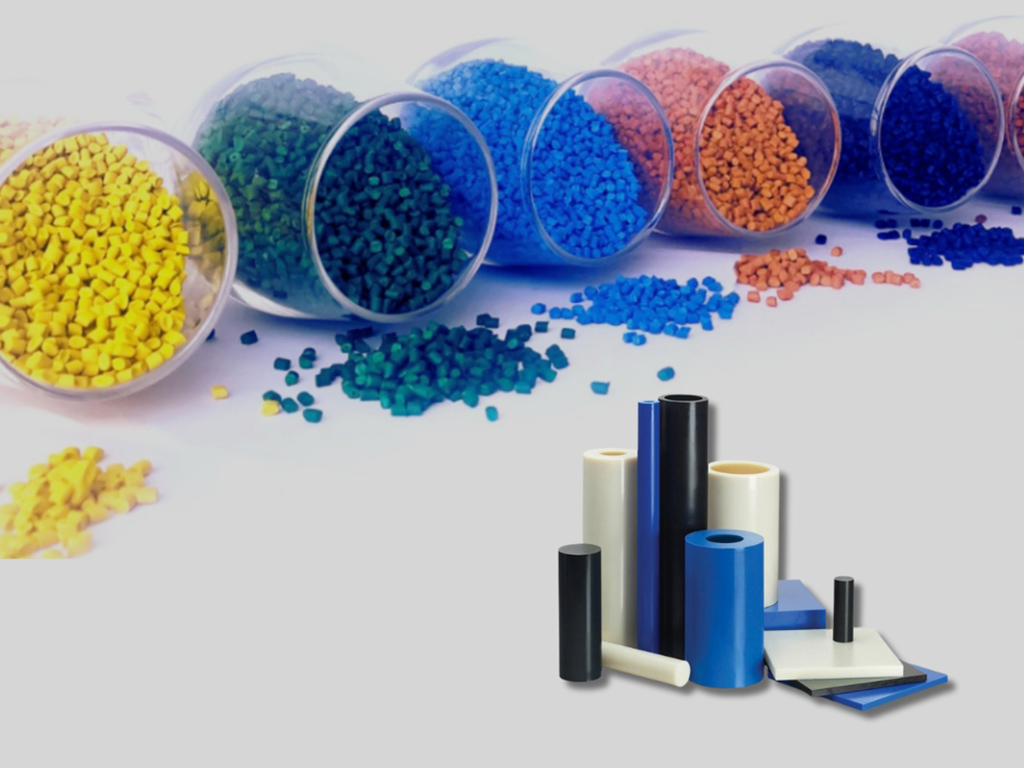
Nylon is the commercial name for synthetic polyamides, renowned for high tensile strength, impact resistance, and flexibility. In Nylon injection molding, two main groups are used: unfilled (virgin) Nylon and filled Nylon (typically reinforced with additives such as glass fiber).
| Comparison Table of Properties: Unfilled Nylon vs. Glass-Fiber-Reinforced Nylon | ||
| Property | Unfilled Nylon | Glass-Fiber-Reinforced Nylon |
| Mechanical strength | Medium to high | Very high |
| Stiffness & impact resistance | Good | Excellent, deformation-resistant |
| Moisture absorption | High | Moderate |
| Typical applications | Household tools, small parts | Automotive parts, gears, housings |
| Processability | Easy to process | Requires higher technical control |
Unfilled Nylon
This group includes grades such as Nylon 6, Nylon 66, Nylon 11, Nylon 12, etc. They retain transparency, offer self-lubrication, and are easy to process. However, these Nylons exhibit high moisture absorption, affecting dimensional stability if not properly dried.
Filled Nylon
Filled Nylon is compounded with glass fiber or inorganic fillers to enhance strength, stiffness, and thermal performance. It is commonly used in demanding applications such as engine covers, gears, machine parts, and automotive components.
Designing Injection Molds for Nylon
Designing an injection mold must precisely match Nylon’s material characteristics:
- Mold material: Because Nylon is molded at high temperatures (approximately 240–290 °C), molds are usually made from hardened steels such as H13 or P20 for superior wear and heat resistance.
- Cooling system: Optimized cooling is required to shorten cycle time. For glass-fiber-filled Nylons, cooling must be more rigorous due to lower thermal conductivity compared with unfilled grades.
- Gate location & venting: Gates should be placed centrally or where filling is easiest. Vents must be precise to avoid trapped air, burn marks, and surface defects.

Detailed Nylon Injection-Molding Process
The Nylon injection-molding process consists of five steps:
Step 1: Drying the material
Nylon absorbs moisture readily, so thorough drying is mandatory—typically in a desiccant dryer at 80–100 °C for at least 4–6 hours. Target moisture content: below 0.2 %.
Step 2: Melting
The resin is heated in the barrel at 240–290 °C. Strict temperature control prevents degradation that causes gas formation and part defects.
Step 3: Injection into the mold
Molten Nylon is injected at 800–1500 bar. Injection speed must ensure quick cavity filling without inducing excessive residual stress.
Step 4: Cooling
Once solidified, the mold cools for a suitable time to stabilize part geometry and relieve internal stress. Cooling time depends on part thickness and material grade.
Step 5: Ejection & quality inspection
Parts are ejected and inspected for dimensions, tensile strength, hardness, and defects such as voids, burns, flow marks, or warpage.

Reference: What Is Plastic Injection Molding and Its Process?
Typical Applications of Nylon Injection Molding
In the automotive sector, Nylon injection molding is used to manufacture components such as tubing, gears, housings, seat frames, and under-hood parts that demand high precision and reliable performance. In the electrical and electronics industries, Nylon serves in device housings, sockets, connectors, PCB components, and assembly accessories.
Additionally, Nylon injection molding produces parts for kitchen appliances, hand tools, sporting goods, and light-industrial products such as wheels, pulleys, and shafts. In healthcare, Nylon is employed in precision items like syringes and disposable instruments.

Choosing the correct Nylon grade along with an appropriate injection-molding process is crucial to ensuring product quality and production efficiency. If you need optimized solutions for engineering-plastic products or require assistance in mold design and processing, Thai Duong Plastics is ready to advise and accompany you toward the best results.
Further reading: What Is PP Plastic? Properties and Applications in Injection Molding