

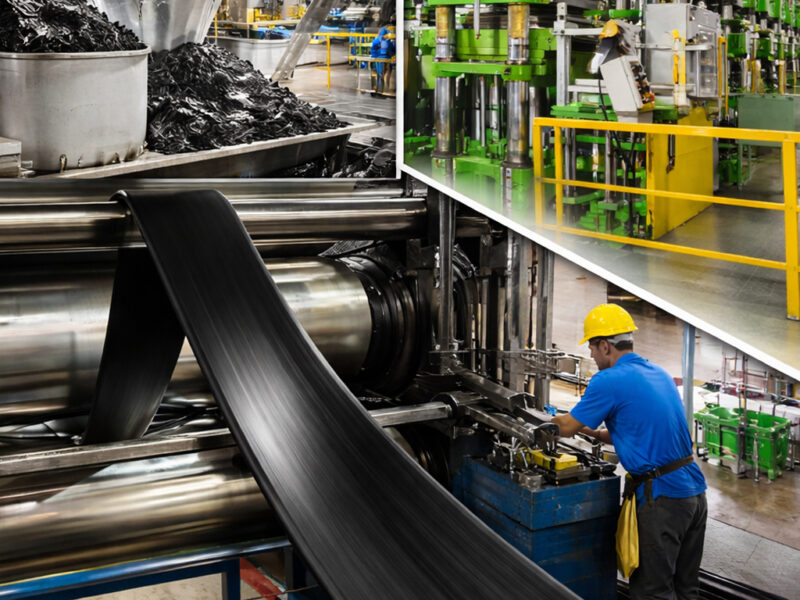
In the production of technical rubber products, the rubber compounding process plays a decisive role in forming mechanical properties and ensuring long-term consistency of the finished parts. In the article below, Thai Duong Plastics helps you understand the core engineering principles behind formulation design, mixing, and quality control to support efficient industrial production.
What does rubber compounding mean in industrial manufacturing?
Rubber compounding is the process of developing a rubber formulation by combining a base elastomer with fillers and additives at defined ratios. The goal is to create a rubber compound whose properties match both processing conditions and the end-use requirements of the final product.
In industrial manufacturing, rubber compounding is not simply “mixing ingredients.” It also includes engineering a formulation based on specific technical requirements to ensure stable quality from batch to batch.
Technical objectives of rubber formulation design
Rubber formulation design is the foundational step that determines the effectiveness of the entire production process. A technically sound formulation should achieve the following objectives:
- Ensure the rubber compound meets the required mechanical/physical targets defined by the design.
- Optimize mixing behavior and processability on the production line.
- Control vulcanization and the durability of the rubber crosslink network.
- Minimize quality variation between production batches.
- Balance technical performance with raw-material cost efficiency.
Defining clear objectives from the design stage helps the formulation deliver high efficiency and stable performance in real production.
Rubber compounding ingredients and their technical roles
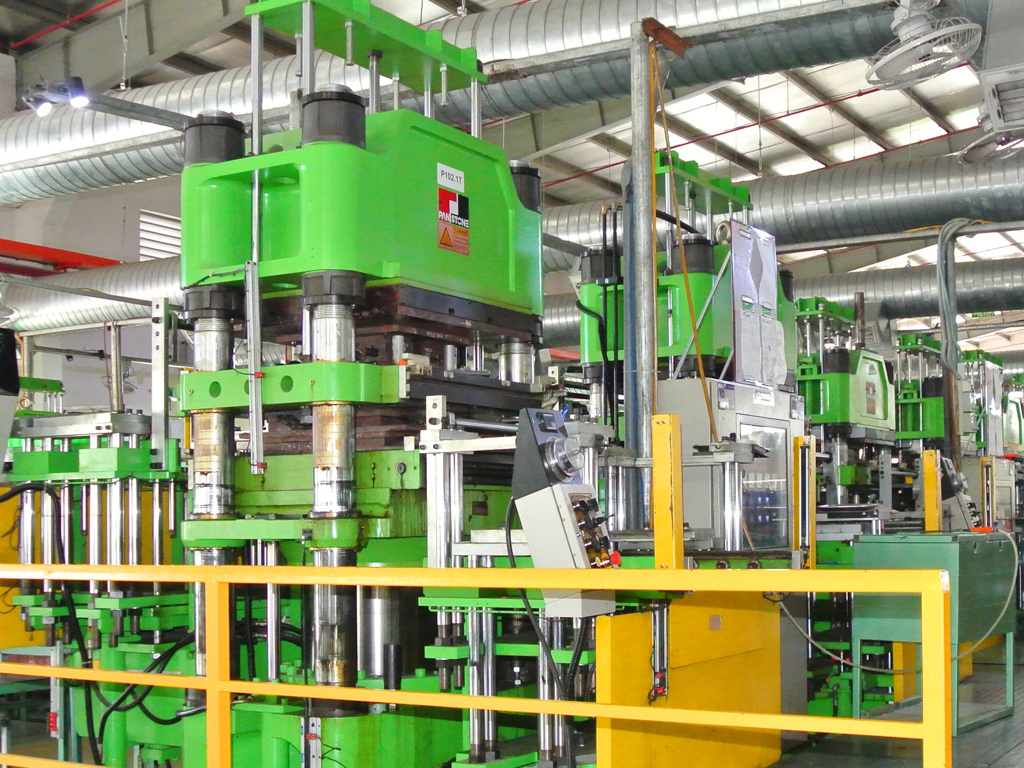
Rubber compounding ingredients are selected and combined based on the specific function of each material group within the compound:
Base rubber (base elastomer)
This is the primary component that determines elasticity and the core structure of the product. Depending on operating environment and technical requirements, common base rubbers include natural rubber (NR) for high tear strength, nitrile rubber for oil resistance, EPDM for weather resistance, and silicone and FKM for harsh temperature conditions.
Fillers
Fillers are used to improve mechanical properties and manage production cost. Reinforcing fillers such as carbon black and silica increase tensile strength and abrasion resistance, while inert fillers such as calcium carbonate, talc, and kaolin increase volume and improve dimensional stability of the rubber compound.
Additives and curing system
This group determines how the compound “transforms” during processing and curing.
- Additives: These include activators such as zinc oxide and stearic acid, plasticizers such as mineral oils, and antidegradants/anti-aging systems such as 6PPD and TMQ. They support mixing and help protect the product against environmental effects.
- Curing system: Typically sulfur or peroxide. This system forms the crosslinks between polymer chains, directly determining hardness, elasticity, and the service life of the final product.
Rubber mixing process and key factors to control
Rubber mixing in industrial manufacturing must be tightly controlled to ensure compound homogeneity and stability throughout the full processing chain:
Pre-processing the base rubber before mixing
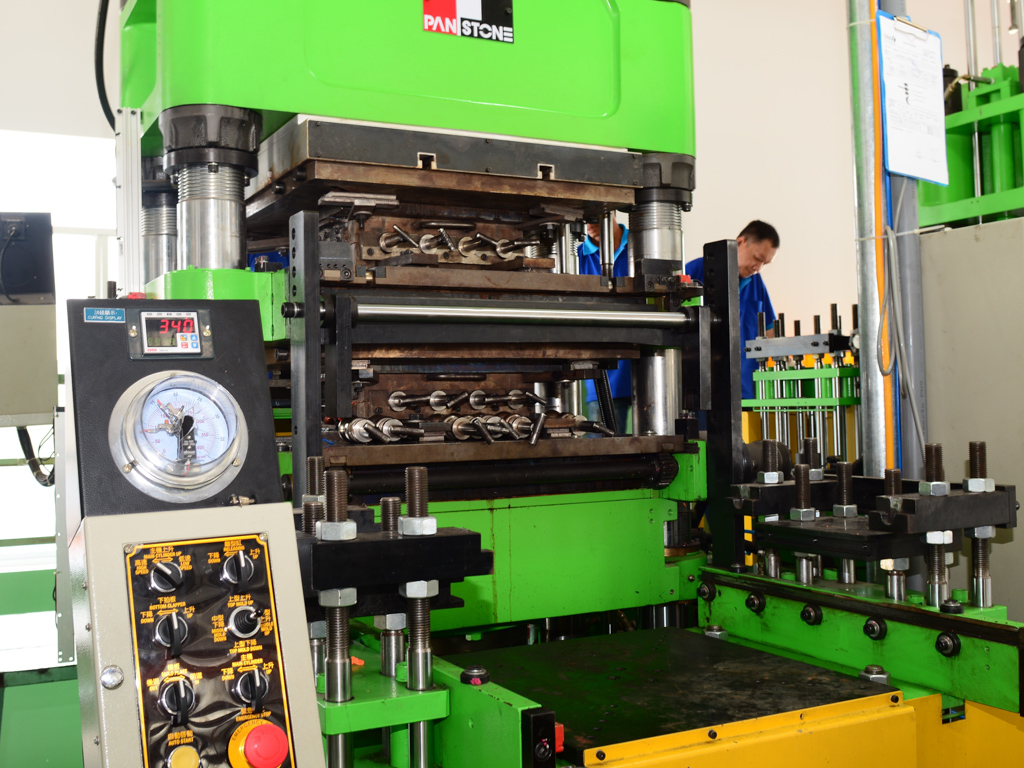
Base rubber preparation is a critical stage before compounding. In its initial state, base rubber often has high viscosity and a tight molecular structure, making it difficult to disperse fillers and additives effectively.
Pre-processing helps adjust plasticity and viscosity so mixing energy can be transmitted evenly through the material mass. If preparation is not appropriate, the compound after mixing may show poor dispersion, non-uniformity, and instability between production batches.
Mixing sequence and dispersion
The order in which ingredients are added has a major impact on compound quality. The base rubber is typically loaded first to reach an appropriate plastic state, then fillers and additives are introduced in stages.
Filler dispersion must be sufficiently uniform to avoid localized “hot spots” or agglomerates, which can reduce mechanical properties and durability. The curing system is added only at the final stage of mixing to avoid premature curing (scorch), which would make subsequent processing difficult.
Controlling temperature and mixing energy
During rubber mixing, heat is generated through friction and shear energy in the mixing equipment. At the right level, temperature can improve ingredient dispersion. However, if not controlled, high temperature can degrade the base rubber or prematurely activate the curing system.
Mixing energy must be high enough to break down filler agglomerates, but not so high that it damages the polymer structure of the base rubber. Controlling temperature and mixing energy together is a key factor in achieving a homogeneous compound and stable downstream processability.
How rubber formulation impacts product quality
A rubber formulation is the outcome of optimization between the product’s technical requirements and real production conditions. Every ingredient and ratio directly affects compound structure, processability, and the mechanical properties of the cured product. Therefore, a formulation is not “fixed”-it should be developed flexibly based on the specific performance objective.
In real production, even a small change in a rubber compounding formula can lead to a noticeable change in strength, elasticity, stability, and processing behavior. For that reason, formulation development and adjustment should be carried out alongside testing and evaluation to ensure the compound meets technical requirements and matches the actual manufacturing conditions.
The role of quality control in rubber compounding
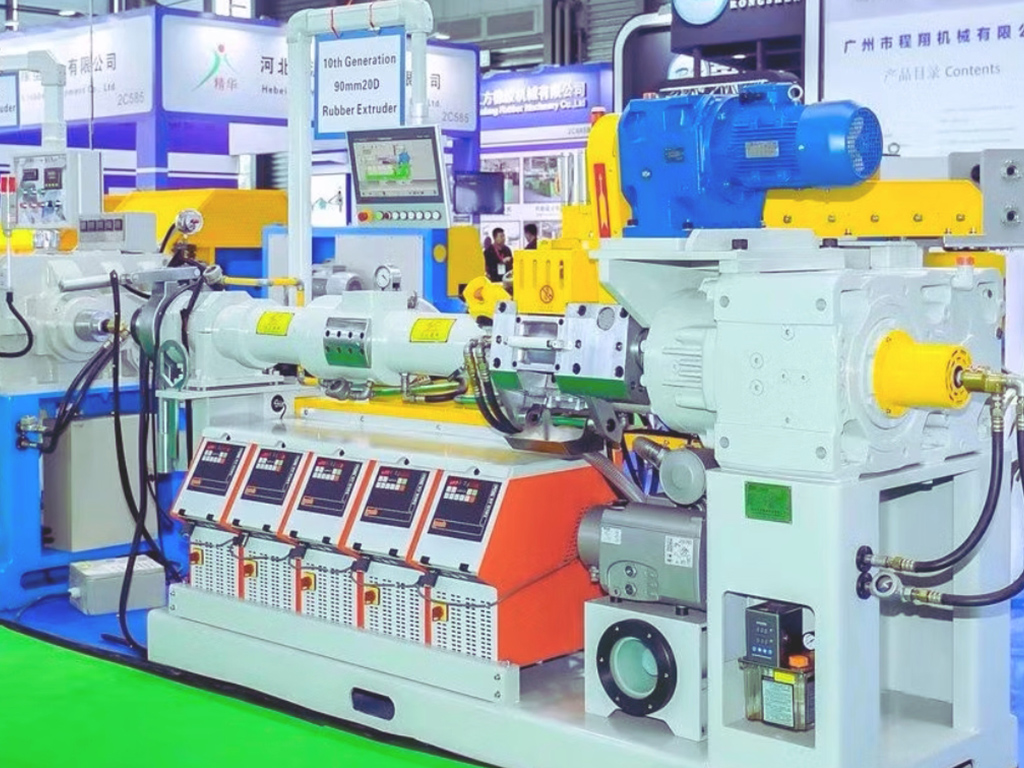
Quality control in rubber compounding is essential to maintain product consistency in mass production. Control efforts focus not only on incoming raw materials, but also on evaluating compound condition after mixing and its processability in the next stages of the production line.
An effective compound quality-control system helps limit batch-to-batch variation, reduce scrap, and ensure the final product consistently meets the defined technical requirements. It is also the basis for maintaining stable quality and improving product reliability in the market.
A technically standard rubber compounding process is the foundation for ensuring quality and efficient manufacturing of rubber products. With practical experience and a clear technical approach, Thai Duong Plastics is ready to consult and implement rubber compounding solutions tailored to each business’s specific requirements-helping improve product quality and competitiveness in production.
See more: Industrial rubber molding solutions by technical requirements