

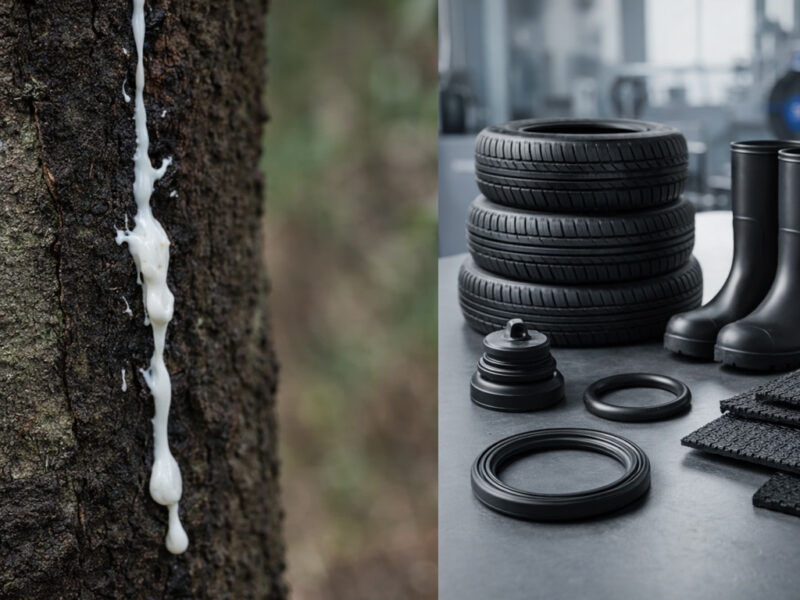
Rubber is typically divided into two main groups: natural rubber and synthetic rubber. Each group has a different origin, polymer structure, and technical properties, which directly affect performance in use and manufacturing cost. With Thai Duong Plastics’ experience in supplying and processing rubber materials, a systematic comparison between synthetic and natural rubber helps businesses choose the right material for each specific operating condition.
Overview of the two rubber material groups
Each rubber type has its own strengths in mechanical performance and environmental resistance. To select the right material, you should first understand the fundamentals of natural rubber and synthetic rubber:
What is natural rubber?
Natural rubber is an elastic material harvested from rubber tree latex. Its main component is polyisoprene with a cis-1,4 structure. Key characteristics of natural rubber include:
- Very high elasticity and fast shape recovery after deformation.
- Strain-induced crystallization, which increases mechanical strength under stretching.
- Excellent dynamic load-bearing and vibration damping capability.
Thanks to these properties, natural rubber continues to play an important role in many traditional engineering applications.
More details: More detailed information about natural rubber
What is synthetic rubber?
Synthetic rubber is a group of elastic polymer materials produced through chemical reactions from petrochemical-based monomers. Depending on polymer structure, synthetic rubbers are engineered specifically to overcome the limitations of natural rubber.
Common types of synthetic rubber include:
- NBR rubber: Excellent resistance to oils and solvents, helping prevent swelling when exposed to fuels.
- EPDM rubber: Withstands UV, ozone, and harsh outdoor weather variations.
- Silicone rubber: Extremely wide temperature range and strong electrical insulation; performs reliably in high-temperature environments.
These advantages make synthetic rubber suitable for specialized engineering applications and harsh environments.

Comparing the differences between natural rubber and synthetic rubber
The differences below directly determine real-world performance, product durability, and manufacturing cost between natural rubber and synthetic rubber:
Differences in origin and polymer structure
The biggest difference between these two rubber groups comes from their raw material sources and molecular structure. Natural rubber has a biological origin and depends on climate, soil, and latex tapping/collection processes. Its polymer structure is relatively uniform but still contains non-rubber components such as proteins, lipids, and fatty acids. These components directly influence vulcanization behavior and the material’s aging characteristics.
Synthetic rubber is produced in factories under tightly controlled processes. Polymer composition can be precisely adjusted in terms of monomer ratio, molecular weight, and branching level. As a result, material quality is more consistent across production batches and less dependent on natural factors.

Detailed comparison of technical properties
In practical manufacturing, rubber selection is primarily based on the core technical properties below:
Elasticity and recovery
Natural rubber stands out for its high elasticity and rapid recovery after deformation. Thanks to strain-induced crystallization, it can increase strength during service-especially effective in applications subject to vibration, impact, and continuous cyclic loads. This allows natural rubber to maintain stable mechanical properties under large deformation, while delivering excellent tear resistance and fatigue resistance across many real-world operating conditions.
Synthetic rubber, in many cases, has lower elasticity, but it can be tuned through polymer-structure design and appropriate compounding. Rather than focusing on extremely high elasticity, synthetic rubber is often chosen for applications requiring long-term mechanical stability, better deformation control, and consistent performance throughout the product lifecycle-especially in harsh industrial environments.
Resistance to oils and solvents
This is one of the clearest differences between the two rubber groups. Natural rubber has key limitations:
- It tends to swell when exposed to mineral oils and fuels.
- Its mechanical properties can degrade in organic solvent environments.
In contrast, synthetic rubber offers many material options engineered specifically to:
- Operate stably in oil/grease environments.
- Withstand fuels and industrial chemicals.
- Maintain sealing performance and mechanical properties over the long term.

Heat, ozone, and weather resistance
Natural rubber performs well within moderate temperature ranges, but it can age more quickly under prolonged exposure to high temperature, oxygen, and ozone without an appropriate protective additive package. Surface cracking and loss of elasticity often occur when the material is used outdoors or in ozone-rich environments.
Synthetic rubber has clear advantages under these conditions. Many synthetic rubbers are engineered for high heat resistance and improved resistance to ozone and UV, enabling stable long-term performance outdoors and in harsh industrial environments.
Tensile strength and abrasion resistance
Natural rubber provides very good tensile strength and abrasion resistance due to its strain-induced crystallization mechanism. This helps it withstand high dynamic loads and continuous friction, which is why it remains an important choice for tires, conveyor belts, and wear-resistant rubber parts.
For synthetic rubber, abrasion resistance depends strongly on the polymer type and the reinforcement system used. To achieve comparable performance, the correct rubber family and a properly designed compound must be selected for the specific operating conditions.
Differences in processability and production control
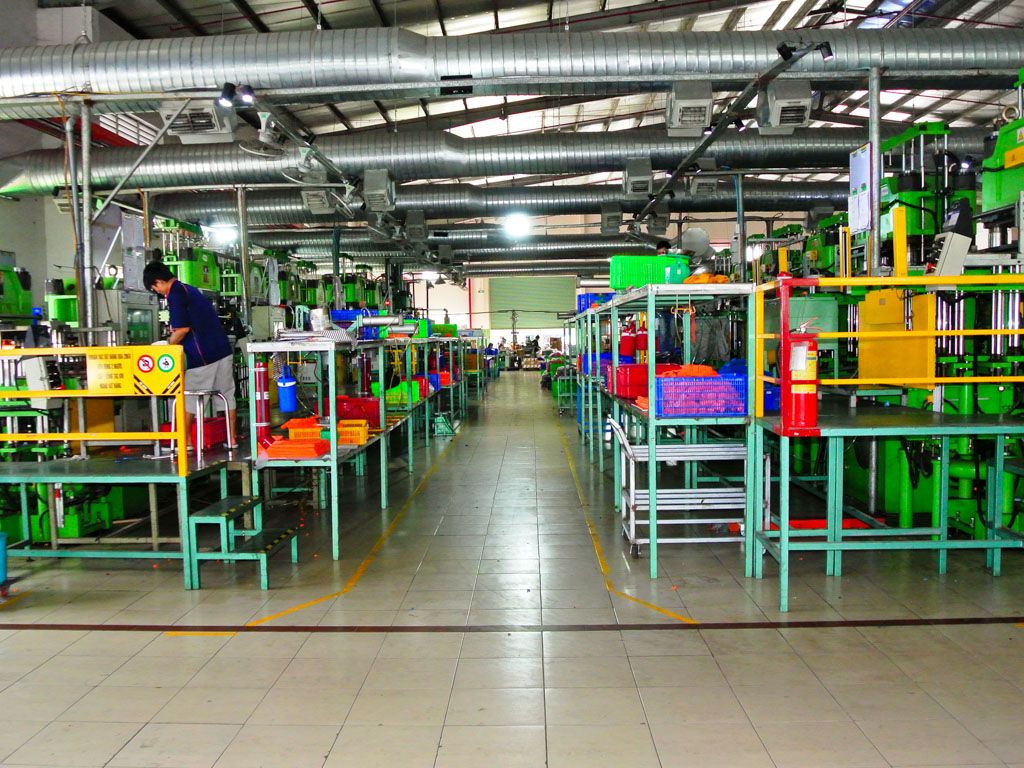
From an industrial manufacturing perspective, the two rubber groups show different strengths and weaknesses. Natural rubber is easy to mix and vulcanize and is compatible with many traditional processing methods, but raw material quality can fluctuate depending on supply sources.
Synthetic rubber has a major advantage in batch-to-batch quality consistency, process controllability, and high repeatability of finished products. This is particularly important for technical parts that require tight tolerances and uniform quality.
Comparing real-world applications by operating conditions
Natural rubber is suitable for applications requiring high elasticity, strong damping performance, and continuous dynamic load in environments without oil/grease exposure. It is widely used in tires, anti-vibration mounts, conveyor belts, bridge bearings, and many traditional technical rubber products.
Synthetic rubber is suitable for applications operating in oils, fuels, chemicals, high temperatures, and long-term outdoor conditions. Typical products include seals and gaskets, oil hoses, automotive parts, waterproofing materials, and industrial sealing systems.
Differences in cost and sustainability
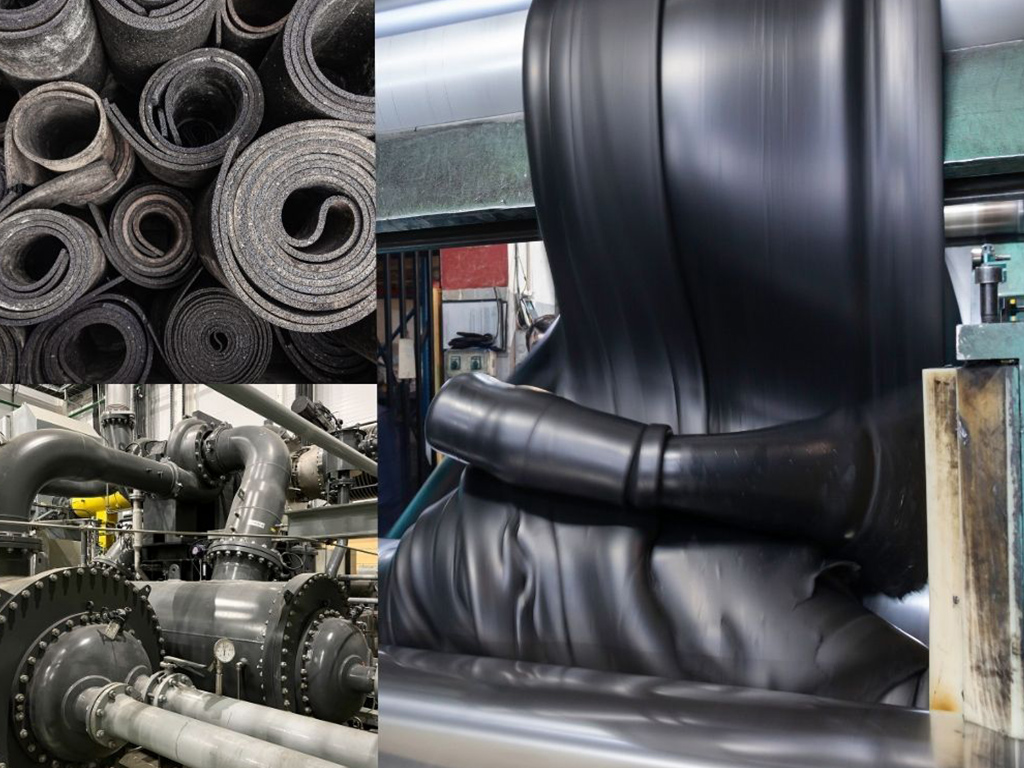
The costs of both natural rubber and synthetic rubber are strongly influenced by raw material markets. Natural rubber depends on agricultural factors, seasonality, and weather conditions, while synthetic rubber is heavily affected by crude oil prices and energy costs.
From an environmental perspective, natural rubber comes from renewable sources and generally has better biodegradability. Synthetic rubber is improving through recycling technologies, the development of more sustainable materials, and solutions to reduce environmental impact in production.

Natural rubber and synthetic rubber each have their own role in industrial manufacturing, depending on operating conditions and technical requirements for each application. In many cases, a rubber compound/blend solution is selected to simultaneously optimize elasticity, environmental resistance, and product stability. If you have questions about selecting the right material and rubber processing for your application, contact Thai Duong Plastics for detailed technical consultation tailored to real needs.