

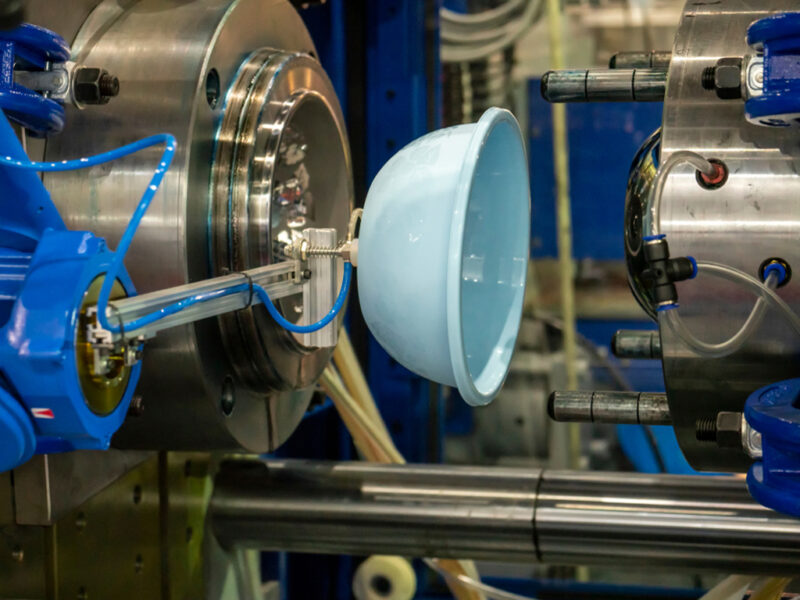
Plastic Injection is a core manufacturing technology used in the production of modern plastic products. It involves melting thermoplastics or thermosets and injecting the molten material into a mold under high pressure to form specific shapes. Thanks to its speed, precision, and flexibility, this method is widely applied – from household goods to high-tech components. In this article, Thai Duong Plastics will explore with you a comprehensive overview of injection molding, from definitions and processes to real-world applications across industries.
Overview of Plastic Injection (Injection Molding)
In plastic manufacturing, injection molding is a vital industrial process involving the use of heat and pressure to shape plastic materials into defined forms and dimensions. This process is typically carried out using specialized equipment known as injection molding machines, which allow tight control over production parameters such as temperature, pressure, and cycle time.
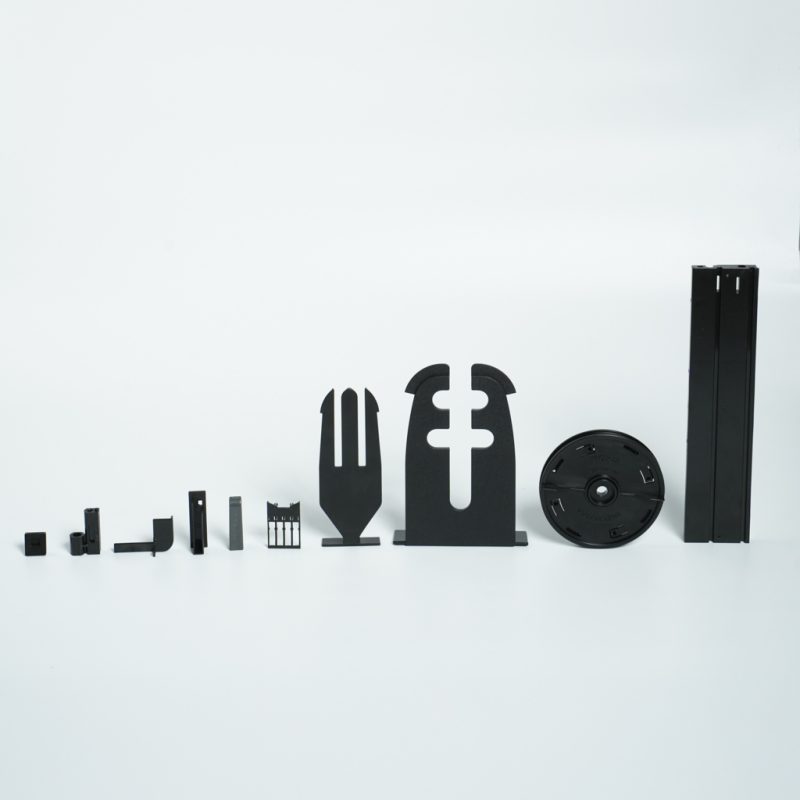
At its core, injection molding involves melting raw plastic pellets and injecting the molten plastic into a mold. The part is then cooled and solidified into its final shape. This method is particularly favored for its ability to mass-produce consistent, high-quality products. In fact, injection molding is regarded as the most commonly used manufacturing process in the modern plastics industry. It requires precise coordination between the molding machine, raw plastic material, and a well-engineered mold.
Compared to other processing methods such as blow molding or thermoforming, injection molding is often preferred due to its capacity to produce complex shapes with high repeatability and minimal waste. This makes it a key manufacturing technique in industries where precision and efficiency are critical.
Plastics Injection Molding Process (Production Steps)
The injection molding process includes several sequential steps, each playing a vital role in creating the final product.
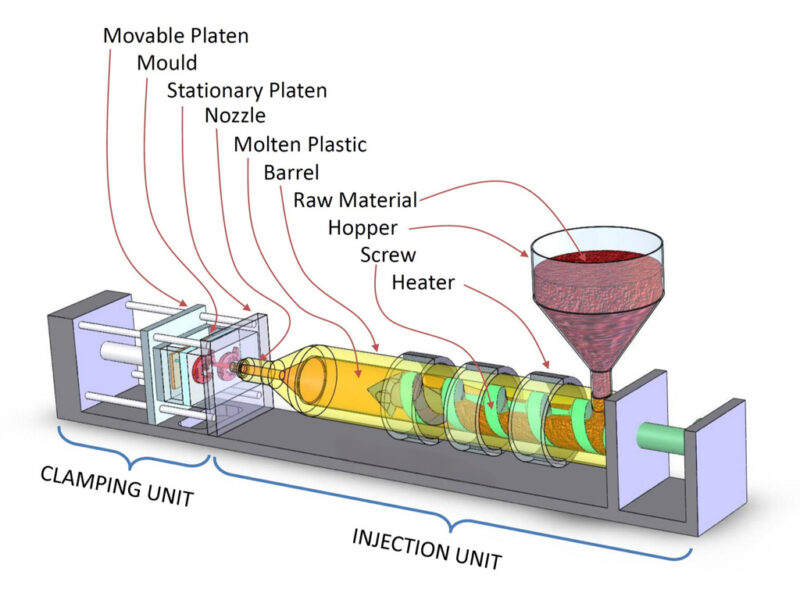
Step 1: Material Preparation
Plastic resins usually come in pellet form and must be dried (especially for moisture-sensitive types like ABS) to prevent defects. Colorants or additives may be mixed in to enhance product performance.
Step 2: Plasticizing and Injection
The pellets are fed into the hopper and heated to the appropriate melting point. A screw inside the machine compresses, mixes, and injects the molten plastic into the mold under high pressure (10,000–30,000 PSI). The injection speed and pressure must be tightly controlled to ensure mold filling and surface quality.
Step 3: Packing and Cooling
Once the mold is filled, holding pressure is applied to compensate for shrinkage during cooling. A cooling system using water or oil ensures fast solidification while maintaining the designed shape.
Step 4: Mold Opening and Ejection
After the material has fully solidified, the mold opens, and the part is ejected using pins or plates. This system must be optimally designed to avoid part deformation.
Step 5: Post-Molding Finishing
Processes like trimming flash, surface treatment, painting, laser engraving, or further assembly complete the product to meet functional and aesthetic standards.
Common Plastic Types Used in Injection Molding
Injection molding technology employs various plastics, grouped into three main categories: thermoplastics, thermosets, and elastomers, each with distinct properties suited to specific applications.

Thermoplastics
- PE (Polyethylene): Easy to process, affordable, chemical-resistant. Used in packaging, pipes, and daily goods.
- PP (Polypropylene): Lightweight, heat- and chemical-resistant. Used in packaging, auto parts, medical tools.
- PVC (Polyvinyl Chloride): Versatile, rigid or flexible. Used in plumbing, doors, and medical equipment.
- PS (Polystyrene): Transparent, rigid, easily shaped. Used in packaging and disposable goods.
- ABS: Impact-resistant, easy to mold. Common in toys, electronic casings, and automotive parts.
- PC (Polycarbonate): Transparent, strong, heat-resistant. Used in lenses, electronics, lighting.
- PA (Nylon): Durable, abrasion and heat-resistant. Suitable for gears, bearings, mechanical parts.
- PET: Highly recyclable and moisture-resistant. Used in bottles and food packaging.
- PMMA (Acrylic): Excellent optics and gloss. Applied in signage, lighting, and lenses.
Thermosets
- Phenolic: Flame-retardant, good insulator. Used in electrical and automotive industries.
- Epoxy: Strong mechanical properties, chemical-resistant. Used in aerospace and marine fields.
- Polyurethane: Flexible hardness. Found in cushions, gaskets, and adhesives.
Elastomers
Highly elastic plastics like TPE or TPU, combining rubber-like flexibility with thermoplastic processing. Used in grips, cable covers, shoe soles, and medical parts.
See also: Engineering Plastics – POM: Classification and Applications
Advantages and Disadvantages of Injection Molding
Key Advantages
- High efficiency and low cost: Enables mass production with short cycles and low per-unit cost, ideal for large-scale manufacturing.
- Precision and consistency: Delivers stable dimensions with tight tolerances, essential for automotive and electronics sectors.
- Complex geometry: Capable of producing intricate shapes that support product design flexibility and structural optimization.
- Material and color variety: Compatible with thousands of resins (PP, ABS, PC, PA66…), easy to color and modify with additives.
Challenges and Limitations
- High initial investment: Molds and machines are costly, making the process viable mainly for high volumes.
- Design constraints: Must follow molding design rules (uniform wall thickness, draft angles), limiting large or undercut features.
- Long development time: Mold design and machining are time-intensive, with limited flexibility for post-mold changes.
- Environmental impact: Petroleum-based plastics are non-biodegradable. Improper recycling contributes to pollution, pushing the need for greener innovations.
Applications of Injection Molding in Industry
Injection molding is widely used due to its ability to produce accurate, repeatable, and cost-efficient parts across various industries:
- Automotive: Manufacturing interior and exterior components like dashboards, door trims, bumpers, grilles, and mirror covers-reducing weight and improving aesthetics.
- Electronics: Producing housings and parts like sockets, connectors, and cases for computers and phones-ensuring insulation and precision.
- Medical: Producing syringes, IV tubes, pill boxes, surgical tools, and diagnostic casings-requiring cleanliness and biocompatibility.
- Packaging: Producing bottles, caps, containers for food, cosmetics, and pharmaceuticals-focusing on safety and volume production.
- Consumer Goods: Creating toys, kitchenware, plastic furniture-meeting everyday demands with durability and visual appeal.
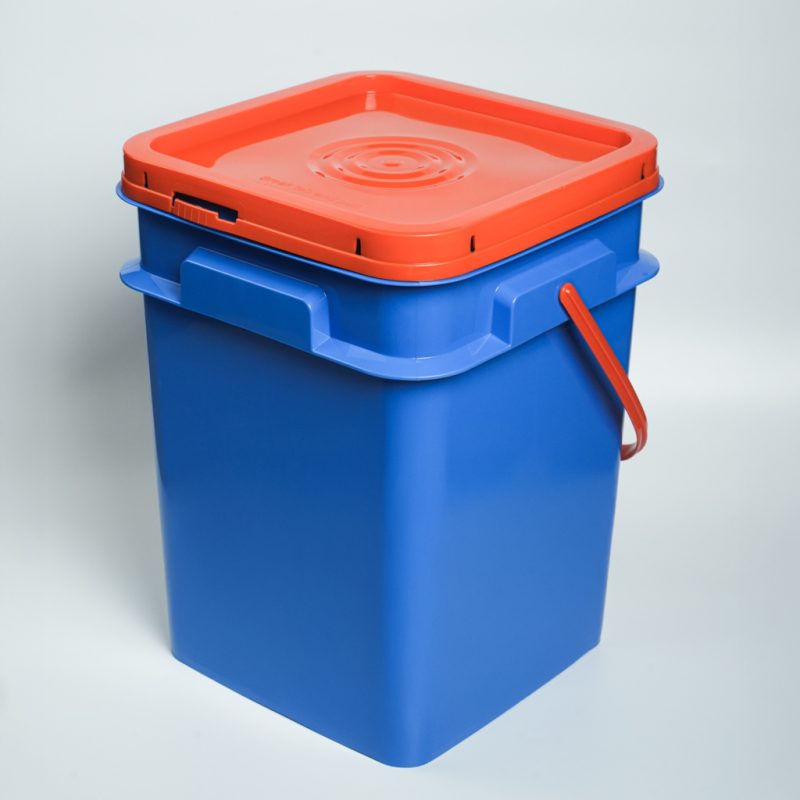
Thai Duong Plastics – Trusted Industrial Injection Molding Partner
Thái Dương Plastics is a leading injection molding provider in Vietnam, specializing in custom-engineered plastic products. Located in My Phuoc 3 Industrial Park (Binh Duong), the company operates 15 injection machines (86–600 tons) with an experienced team and extensive material capabilities (PP, ABS, POM, PA, TPU…). We deliver accurate, rapid, and reliable molding solutions for domestic and international industries.
See more: Thái Dương Plastics’ Industrial Injection Molding Capabilities
Injection molding remains a fundamental technology in modern plastic manufacturing, valued for its speed, precision, and mass production capability. Despite some challenges like tooling costs, it continues to dominate the market thanks to process efficiency, automation trends, and recycling advancements. This article provides you with a comprehensive understanding of injection molding-from process fundamentals to its wide-ranging industrial applications.